
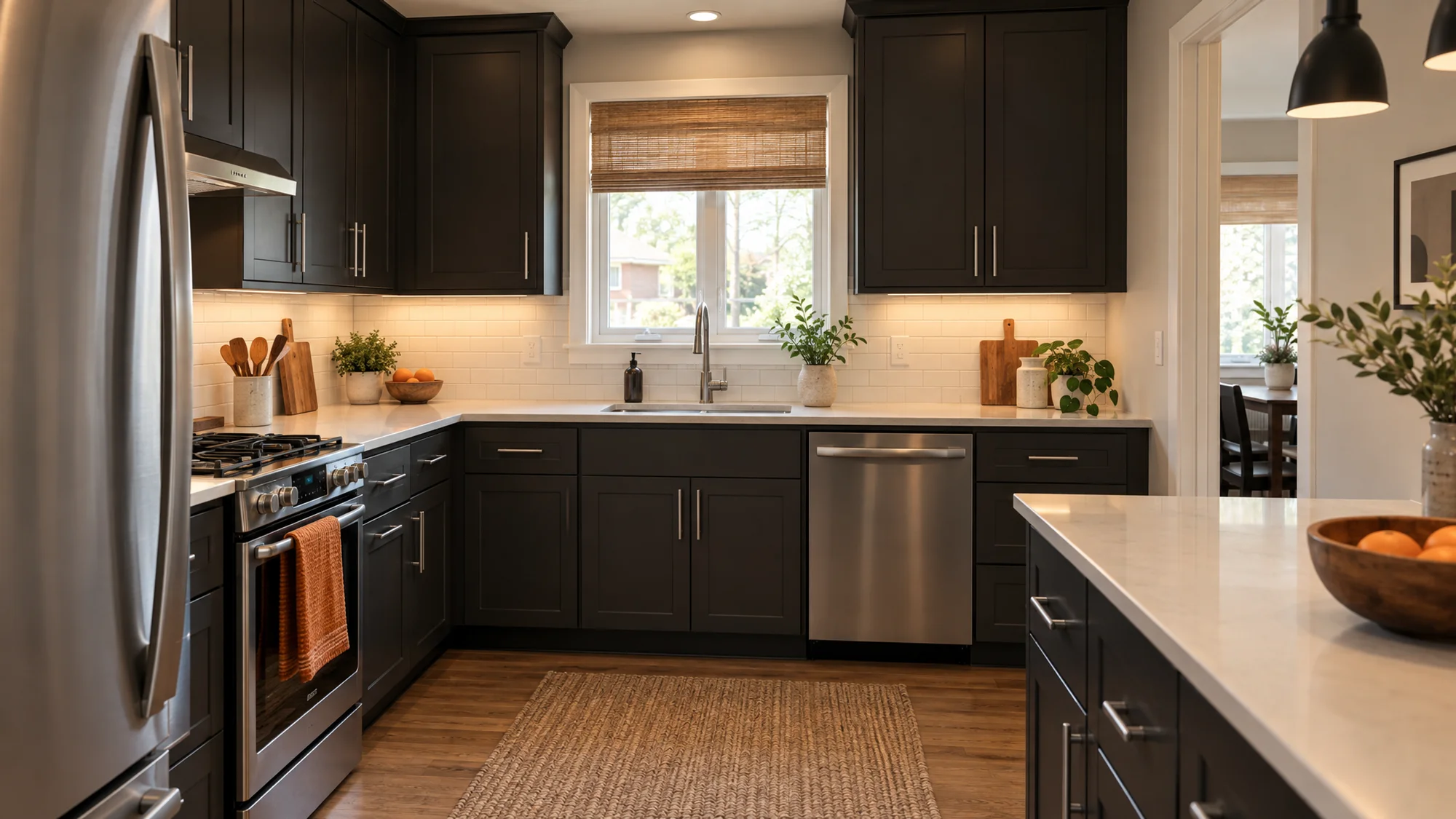
Cabinet Refacing for Small Kitchens in Chicago: What Works
Cabinet refacing for small kitchens in Chicago protects countertops and cuts renovation time. Get a free Kitchen Cabinet Guys assessment today.
Published
11/2/2026
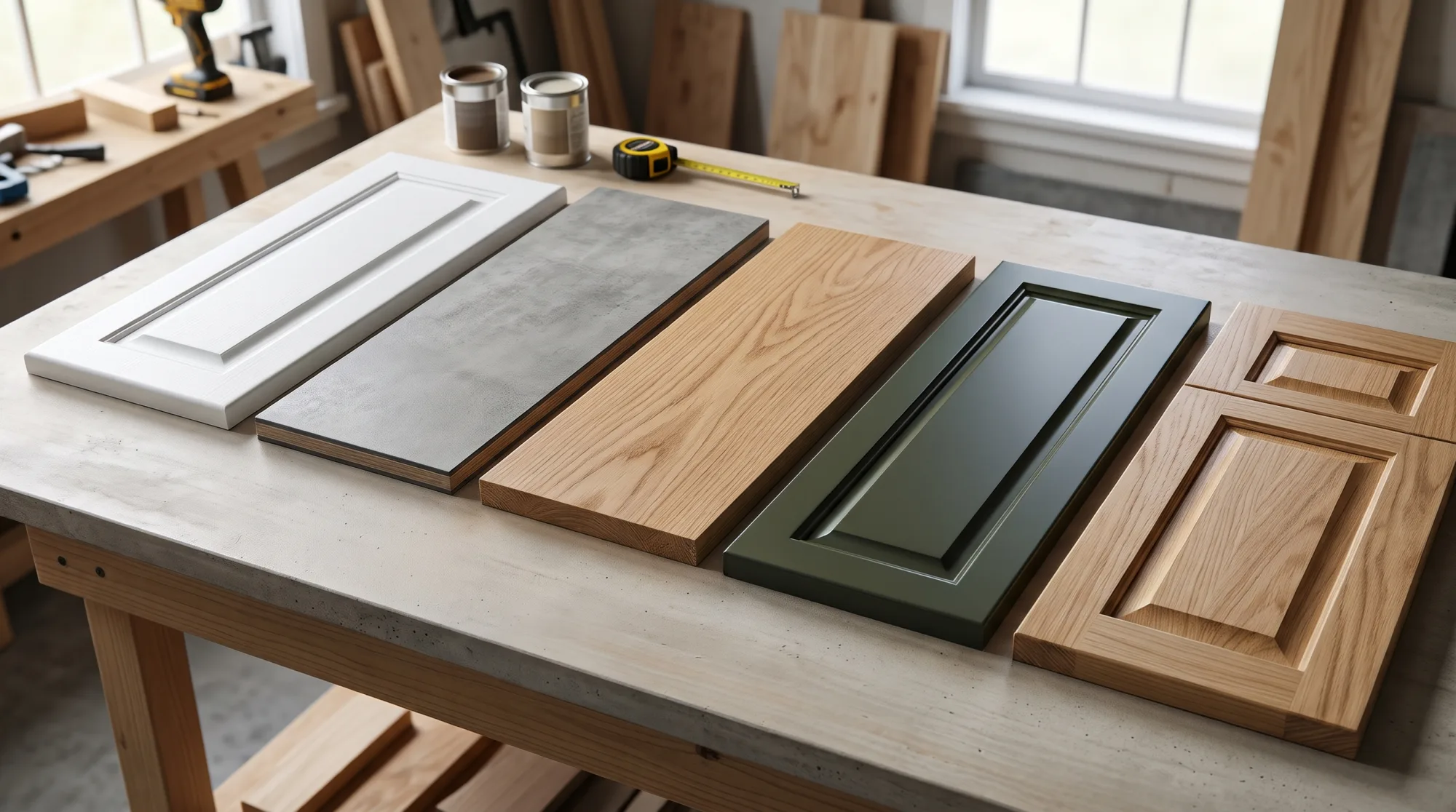


Your cabinet boxes are solid, but the doors and drawer fronts are not. That gap is what cabinet refacing is built to close.
The material used decides almost everything else: how the kitchen looks on day one, how it holds up to steam and grease, and how long it stays that way. Some materials resist moisture and wear slowly. Others look sharp in a showroom, then struggle once real cooking starts.
Kitchen Cabinet Guys manufactures every refacing material at our own West Chicago facility, so we see how each one performs long after installation. Here are the five materials you’ll encounter most often in cabinet refacing, along with their strengths and potential drawbacks.

Cabinet refacing updates your existing cabinet boxes with new surface materials and replaces the doors and drawer fronts, giving your kitchen a fresh look without tearing out the cabinets and starting from scratch. The cabinet frame stays put — only the surface changes.
Because the boxes stay in place, refacing skips plumbing, electrical, and flooring work and typically costs 30–50% less than full cabinet replacement. The material you choose can determine whether your refacing investment lasts 10 to 20 years or needs replacing after just a few years.
Here's how the five most common cabinet refacing materials stack up, one by one.
Rigid thermofoil, also called 3D laminate, is a finish material bonded to an MDF door in a vacuum press, which seats it into every groove without leaving air pockets or loose edges.
High-pressure laminate is made by fusing layers of resin-soaked kraft paper under heat and pressure to create a hard, durable sheet. It’s the same type of material used for countertops and commercial furniture.
Wood veneer is a thin layer of real hardwood, sliced to roughly 1/40 inch and bonded to a stable substrate. It’s the only material on this list that is genuine wood rather than an engineered or printed surface.

Painted MDF provides a smooth, grain-free finish for cabinet boxes and doors, using cabinet-grade paint instead of laminate or veneer.
Solid wood doors replace your existing doors and drawer fronts with new ones made from real hardwood. The surrounding cabinet boxes are typically finished with matching laminate or veneer.
Here's how all five stack up side by side on the factors that matter most.
Lifespan estimates assume proper installation, sealed edges, and normal kitchen conditions. Moisture affects each material differently, especially around sinks, dishwashers, and ranges. Choosing the right material for each cabinet location is just as important as finding a finish that matches your kitchen’s style.
Kitchen Cabinet Guys has manufactured cabinet refacing doors and finish materials at our West Chicago facility since 2019. Doors and drawer fronts are cut on CNC equipment from MDF, finished with rigid thermofoil or 3D laminate, and sealed under heat and pressure in a vacuum press, so the finish bonds into every groove and edge.
While we finish the doors at our facility, another team works on your cabinet boxes at home. They remove the old finish, clean and prepare the surfaces, then apply matching material to ensure the boxes and doors have a consistent color and texture.
We finish most Chicagoland refacing projects in 3 to 5 business days. Outside our service area, we also offer nationwide thermofoil door repair, with a 48-hour turnaround for local Chicagoland customers.
Get a free consultation and a same-day price based on your cabinets, your kitchen's moisture exposure, and the finish you want.

Call Us Now: (800) 809-7197 or
The right material depends on where the cabinets sit, how the kitchen gets used, and how long you want the finish to last.
Rigid thermofoil or 3D laminate is the strongest all-around choice for daily cooking, spills, and steam. High-pressure laminate fits the same use case well on flatter door styles. Wood veneer is a good choice when matching an existing wood tone is more important than maximizing moisture resistance. Painted MDF fits when a specific color and detailed door profile outweigh long-term wear resistance. Solid wood doors suit homeowners replacing doors outright who want genuine wood they can refinish years down the road.
Choosing the right cabinet refacing material depends on how you use your kitchen and how long you want the finish to last with minimal upkeep. Kitchen Cabinet Guys manufactures every finish material at our own West Chicago facility and installs most Chicagoland projects in 3 to 5 business days. Contact us today for a free consultation and a same-day price based on your cabinets.
It depends on where the cabinets are and how the kitchen gets used. Rigid thermofoil and high-pressure laminate hold up best against moisture and daily wear. Wood veneer is a good fit for homeowners who want to match their existing wood tones. Painted MDF fits a specific color and door detail. A consultation that looks at your actual cabinets is the fastest way to narrow it down.
Older thermofoil products applied without a vacuum press were more prone to peeling near heat sources. Kitchen Cabinet Guys bonds rigid thermofoil to MDF doors under heat and pressure in a vacuum press, which seats the material into every edge and profile line rather than leaving loose spots that lift over time.
Yes, for kitchens where a real-wood look matters and the cabinets are not constantly exposed to moisture. Veneer edges must be sealed properly during installation because the thin wood layer can peel or lift if water seeps underneath, especially near sinks and dishwashers.
Rigid thermofoil and high-pressure laminate typically last 15 to 20 years with proper installation, though how long refaced cabinets last also depends on cabinet location and moisture exposure. Wood veneer runs closer to 10 to 15 years, depending on sealing. Painted MDF usually needs touch-ups within 5 to 8 years in high-traffic spots.
Yes. Kitchen Cabinet Guys applies the same finish material to your cabinet boxes on-site that is bonded to your new doors at our facility, so the color and texture match across the whole kitchen.
Not always, but most refacing projects replace the doors and drawer fronts while keeping the existing cabinet boxes. This makes a big visual difference because the doors are one of the first things people notice when they walk into a kitchen.

Kitchen Cabinet Guys brings physical material samples to your home, checks your cabinet boxes, and gives you a same-day price for refacing.
Call us now: (800) 809-7197 or
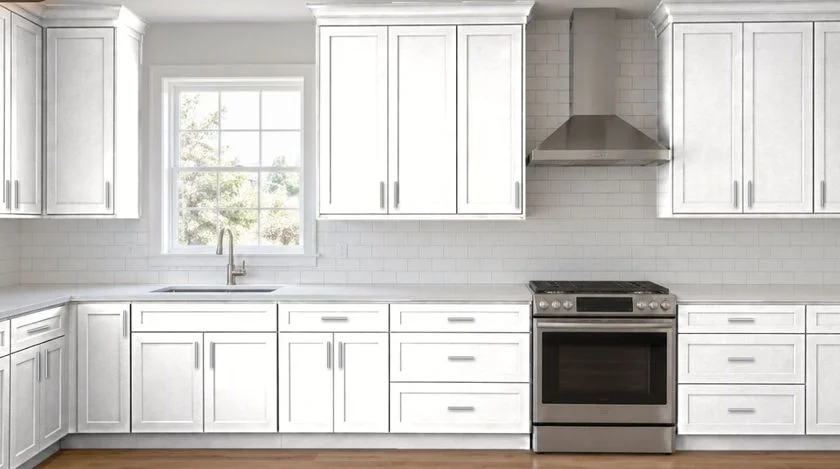
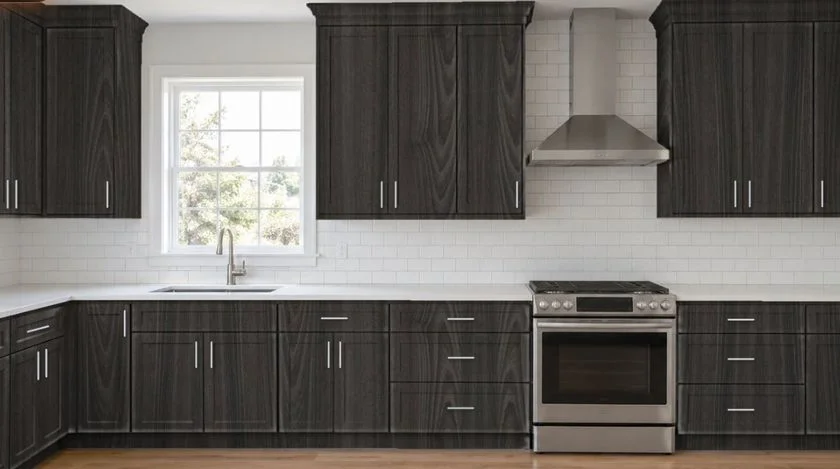
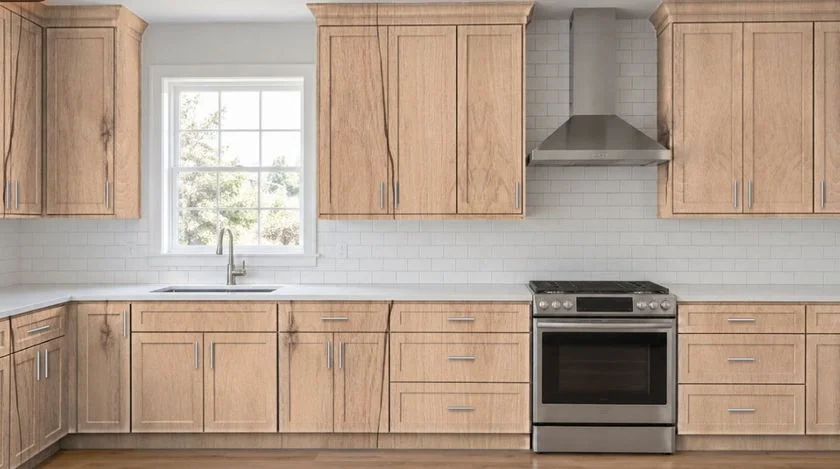 VisualizerChoose Color & Style for Your Kitchen Cabinet
Cabinet refacing for small kitchens in Chicago protects countertops and cuts renovation time. Get a free Kitchen Cabinet Guys assessment today.
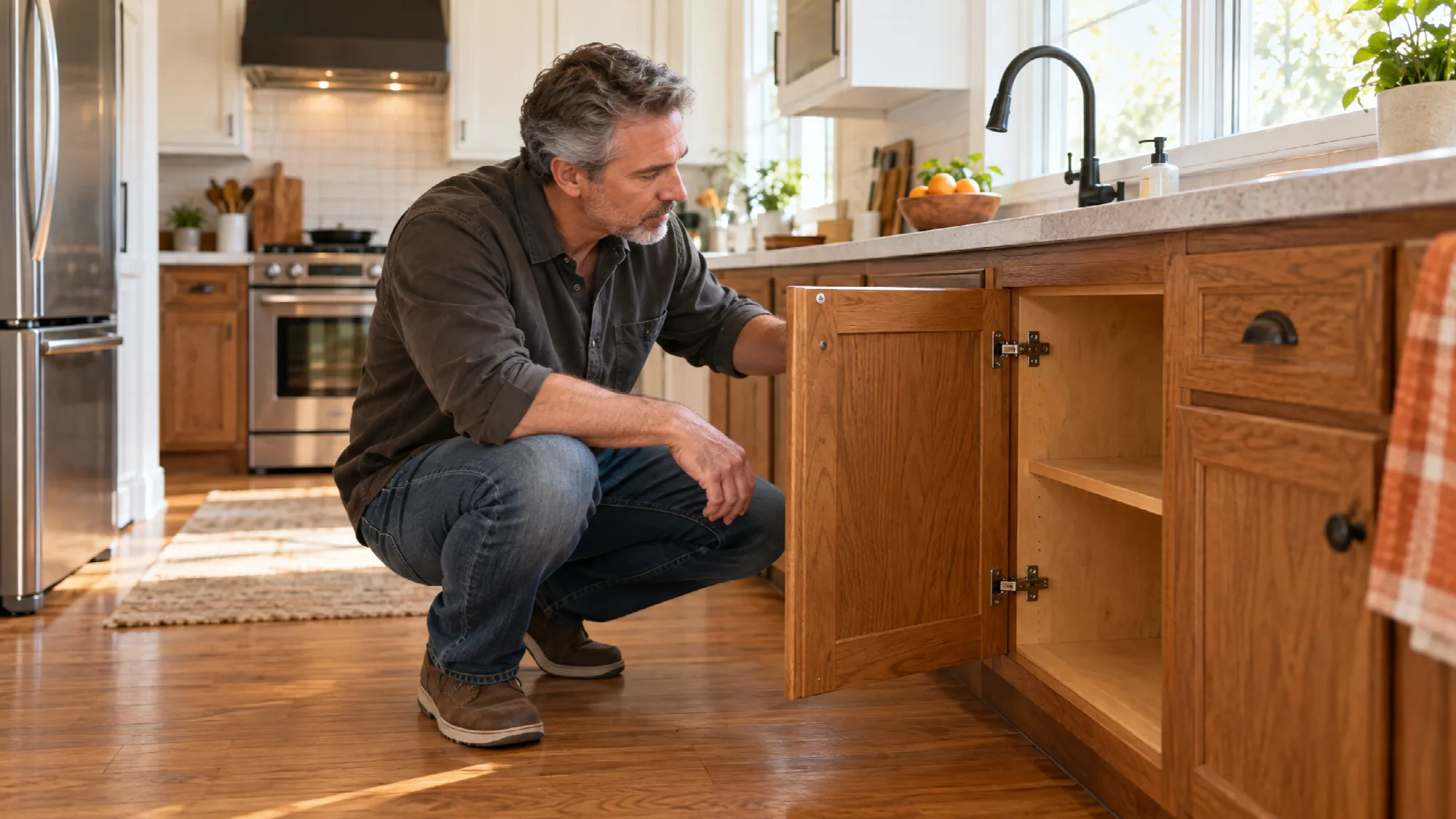
Learn the exact signs to reface kitchen cabinets in Chicagoland, compare real pricing and timelines, and schedule a free consultation today.
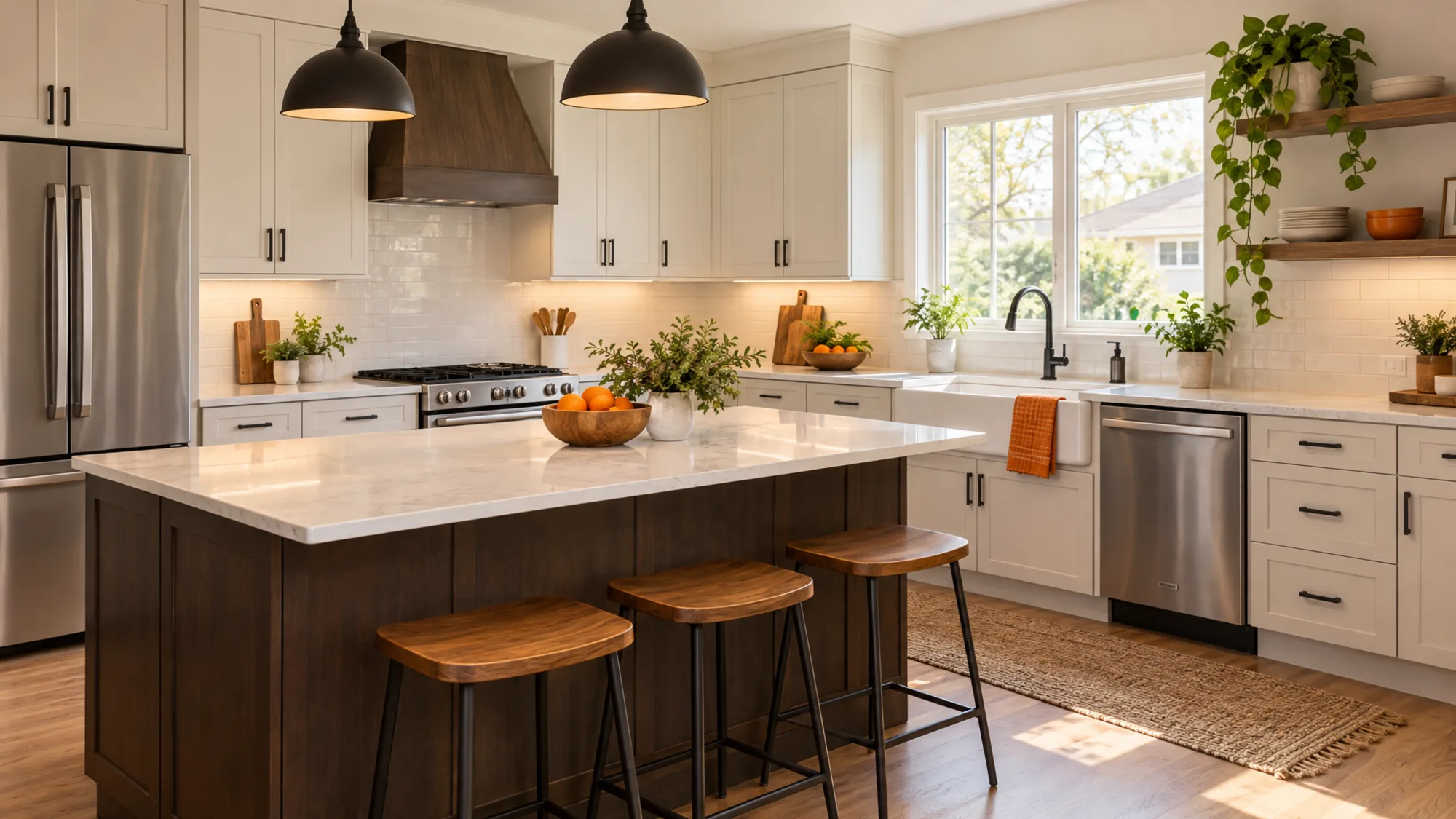
Compare eco-friendly cabinet finishes for your 2026 refacing project, from 3D laminate to certified wood, and see why refacing cuts landfill waste.