
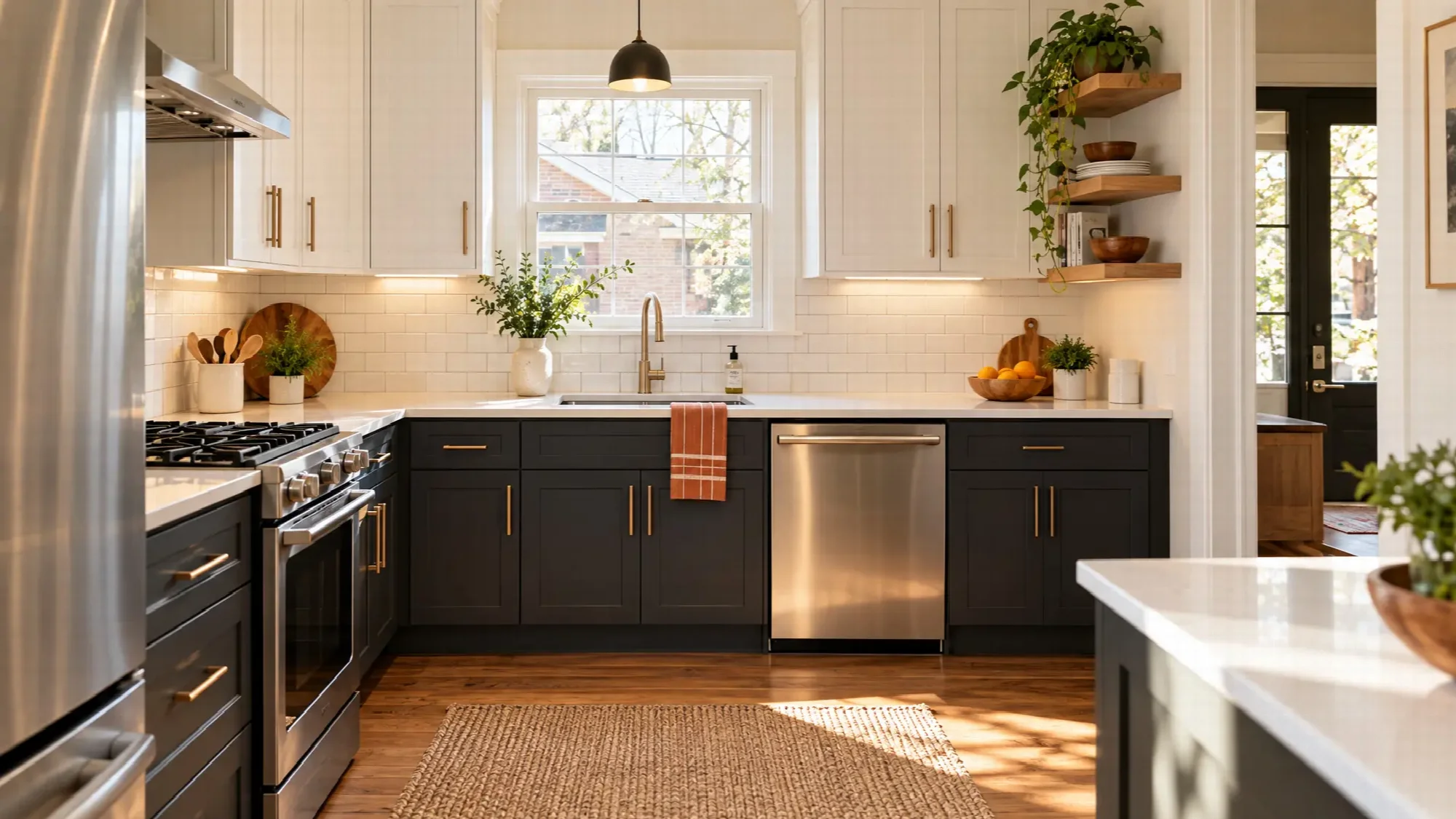
How Much Does Cabinet Refacing Cost in 2026? Complete Breakdown.
Cabinet refacing cost in Chicago runs $4,500–$10,000, or $100–$450 per linear foot. See what drives the price and get a same-day price estimate today.
Published
10/22/2026
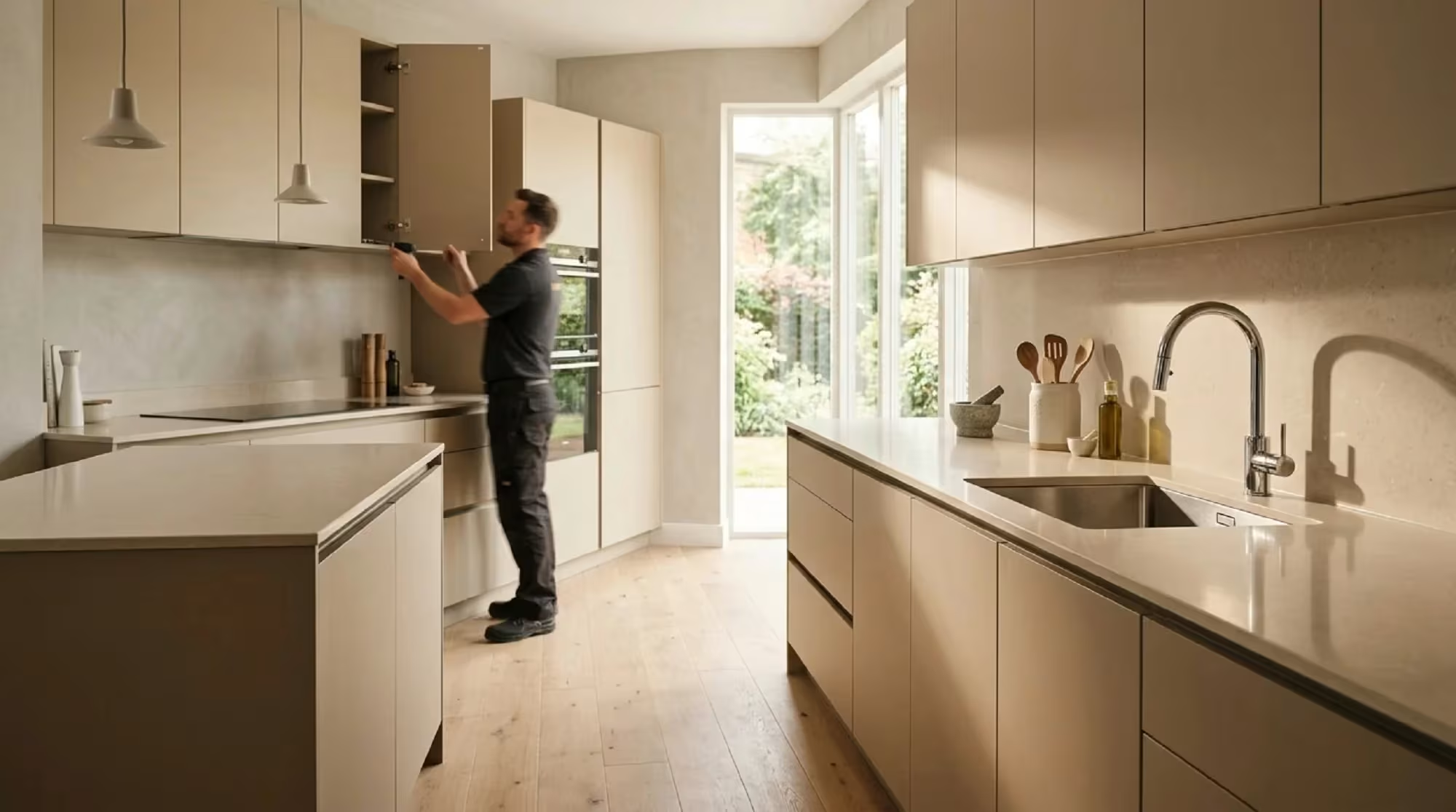


Most homeowners assume their cabinet doors are stuck with them forever. But this isn’t the case. Through cabinet refacing, the doors on your existing boxes can be replaced with any style you want, while the cabinet frames stay exactly where they are. The door style you pick is the single biggest visual change in the entire project, bigger than the color, bigger than the hardware, bigger than the countertop.
Our team at Kitchen Cabinet Guys has refaced thousands of Chicago-area kitchens since 2019, and we manufacture every replacement door at our West Chicago facility. We've seen incredible kitchen transformations simply by swapping a raised panel door for a flat slab, or a builder-grade arch top for a clean Shaker. This guide covers every door style we produce for refacing projects, what each one costs, which kitchens they suit, and how to pick the right one without regret.
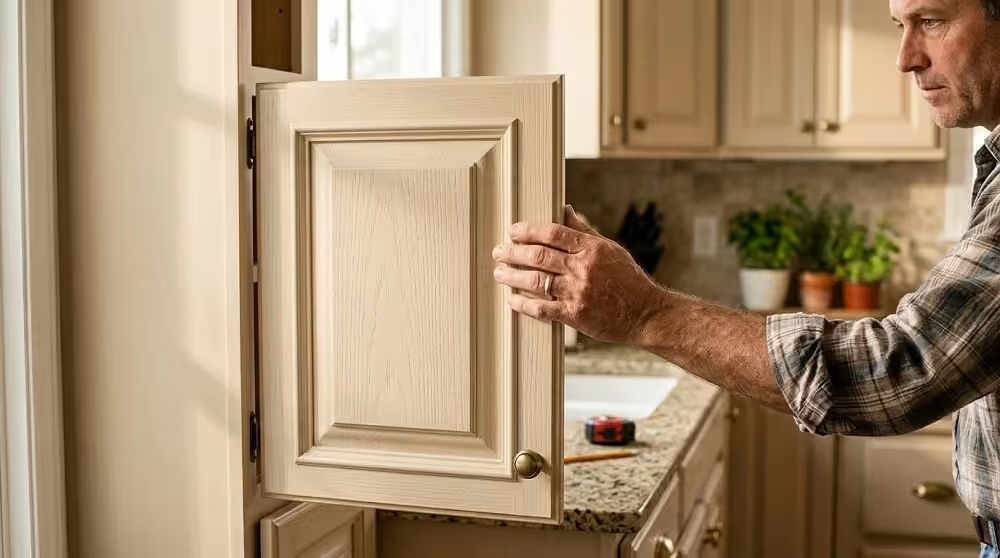
When you reface cabinets, the door style is roughly 70% of what people see when they walk into your kitchen. The cabinet boxes get a matching 3D laminate finish, but the doors carry the silhouette, the profile, the personality. Pick the wrong style and your $7,000 refacing project looks like the dated kitchen you started with. However, the right style can make the same boxes look like a $30,000 replacement.
The hard truth is that most online cabinet door guides are written by manufacturers selling new cabinetry, not refacing companies. They don't explain which door styles work best with existing cabinet boxes, which profiles meaningfully impact the cost of a refacing project, or which options tend to photograph well in Chicago bungalows, Lincoln Park three-flats, or Schaumburg ranch homes. We do.
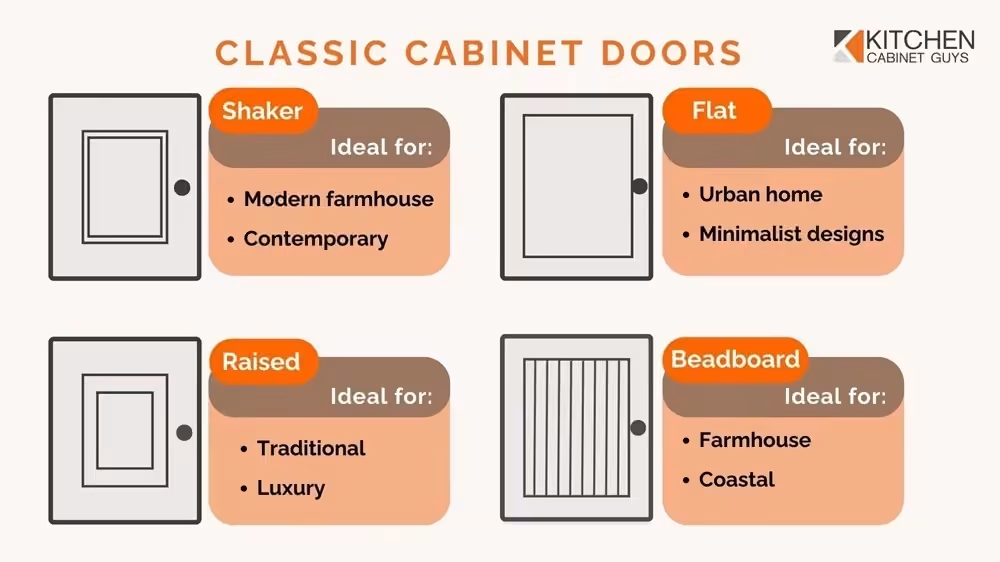
Below are the four door styles we produce most often for Chicagoland refacing projects, with the typical price range each adds to a standard kitchen refacing job ($4,500–$10,000 base range for a typical 30-linear-foot kitchen).
Shaker cabinet doors remain the most popular choice nationwide, featuring a five-piece door with a recessed panel. This timeless design originated with the Shaker community's principles of simplicity and functionality. Shaker doors work equally well in modern farmhouse kitchens and contemporary spaces.
For refacing in Chicago, Shaker is the profile that’s most often requested. We manufacture them from MDF at our West Chicago facility, then finish them with 3D laminate in any of 200+ colors.
Typical price impact: Included in our standard refacing range of $4,500–$10,000 with no upcharge.
Best for: Chicago bungalows, Park Ridge colonials, Streamwood ranches, and any kitchen where you want a style that won't date in five years.
Slab doors are a single flat panel with no frames, grooves, or raised elements. The clean surface is the appeal of the entire design. They're especially popular in urban homes and minimalist designs.
For refacing, slab doors are the fastest to manufacture and the easiest to finish in high-gloss or matte 3D laminate.
Typical price impact: Included in our base refacing range, often the lowest-cost option.
Best for: Downtown Chicago condos, Lincoln Park lofts, modern Naperville new builds, and any space where you want handle-less or push-to-open hardware to read as the only detail.
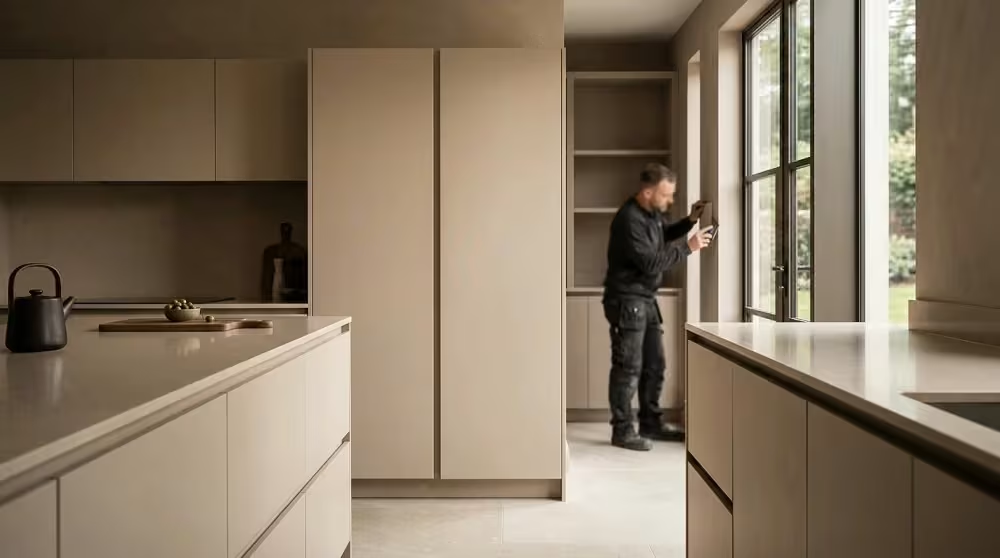
When it comes to adding depth and visual interest to your kitchen, raised panel doors are the undisputed champions. This traditional cabinet door style is customizable, from simple raised center panels to elaborate cathedral designs.
Typical price impact: Raised panel doors need more CNC machining time compared to Shaker or slab, which can add $500–$1,500 to a refacing project, depending on the size of the kitchen and complexity of the panels.
Best for: Traditional Oak Park Victorians, Hinsdale colonials, North Shore Tudors, and homes where existing architectural millwork already favors traditional profiles.
Looking for something with a bit more personality? Beadboard cabinet doors might be your answer. This style is perfect for farmhouse or coastal kitchen designs as it adds texture and character to your space.
Beadboard inserts are typically used on accent cabinets (island ends, glass-front uppers, pantry doors) rather than full kitchens.
Typical price impact: $50–$150 per door above standard Shaker pricing.
Best for: Farmhouse-style kitchens in Geneva, St. Charles, and Barrington, where the rest of the home leans toward shiplap and cottage detailing.
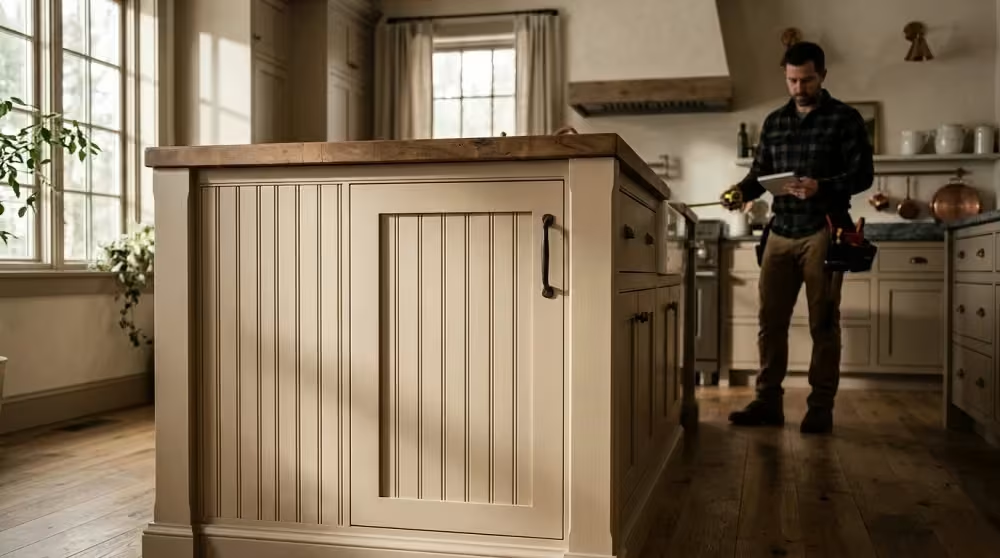
Rustic and distressed wood doors are ideal in kitchens where smooth, uniform surfaces feel inconsistent with the home's overall character. The style relies on visible grain, knots, and surface variation, achieved through genuine distressed solid wood or through wood-grain 3D laminates.
At Kitchen Cabinet Guys, we produce rustic-look doors in weathered oak, reclaimed walnut, and aged hickory finishes. These laminate surfaces outperform real distressed wood in active cooking zones because they resist moisture, clean with a standard wipe, and don’t absorb grease into the surface grain.
Typical price impact: Wood-grain laminate finishes are included in the standard refacing range. Premium distressed-texture laminates may add $200–$400 to a typical Chicago kitchen, depending on linear footage and finish selection.
Best for: Farmhouse and cottage-style kitchens in Geneva, St. Charles, and Barrington; homes with apron-front sinks, shiplap walls, or vintage-style hardware where smooth slab or Shaker surfaces can feel visually out of place with the rest of the space.
As we've seen, popular cabinet door styles each offer unique benefits and aesthetics. From the timeless simplicity of Shaker doors to the charming texture of beadboard, these classic options continue to dominate for a reason. Choosing the right style is about understanding how each design complements your kitchen's overall vibe while fitting seamlessly into your lifestyle.
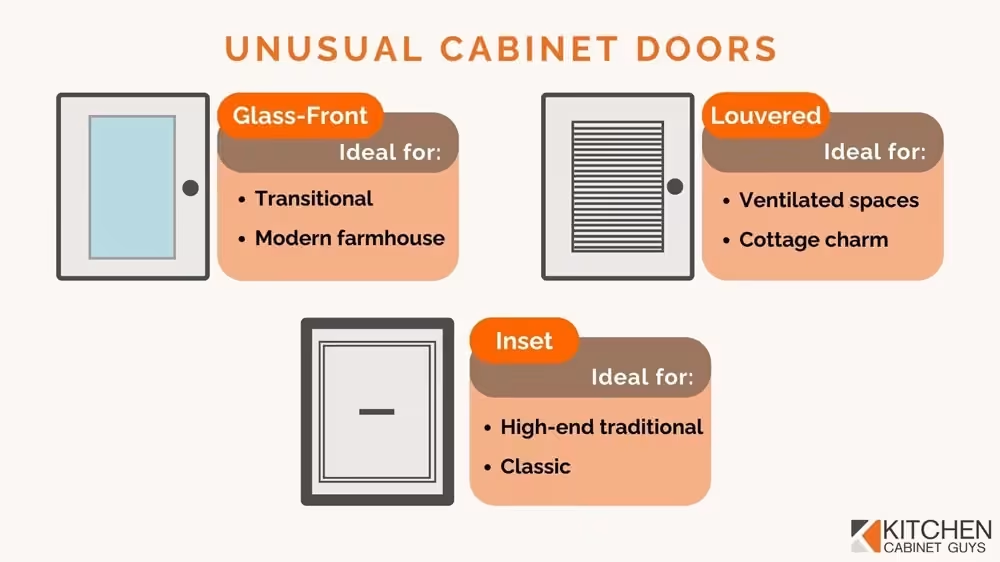
While the above styles are popular, they aren't your only options. Now, let's explore some options that might not be on your radar but deserve attention. Traditional styles have their place, but sometimes your kitchen calls for something more distinctive.
Glass cabinet doors combine an open frame design with glass inserts, perfect for displaying fine china or adding visual interest to upper cabinets. These doors come with options like mullion designs, clear, or frosted glass.
For refacing projects in Chicago, we produce glass-ready frames in Shaker or mullion profiles. The glass itself is sourced and installed locally.
Typical price impact: $75–$200 per door, depending on glass type.
Best for: 2–4 upper cabinets as accent pieces, not the entire kitchen.
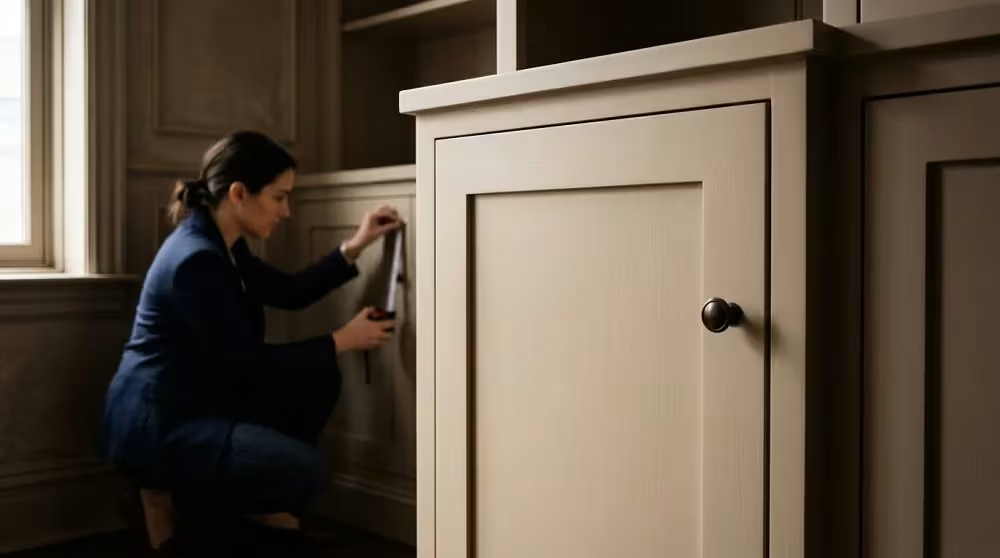
Inset doors sit flush inside the cabinet frame rather than overlaying it, resulting in a furniture-grade look that reads as custom millwork.
Important note for refacing customers: true inset construction requires the cabinet frame itself to be built for it. Most existing Chicago-area cabinet boxes are full or partial overlay, meaning inset doors are generally not achievable through refacing alone; it requires cabinet replacement. We're always transparent about this during consultations, so you don't pay for an outcome we can't deliver.
Typical price impact: When achievable through full cabinet replacement, inset construction typically adds $3,000–$8,000 to a project compared to overlay construction because of the tighter manufacturing tolerances required.
Best for: Historic Chicago homes where the owner is planning full cabinet replacement and wants a furniture-grade, custom-millwork appearance that matches original architectural detailing.
Louvered doors are a fantastic option for adding a breezy, relaxed aesthetic to your kitchen. They feature horizontal slats that allow airflow, making them both stylish and functional, perfect for coastal-inspired spaces or pantry cabinets.
Louvered profiles are rare in Chicago kitchens, but may be used in some cases on pantry doors or appliance garages. We’re happy to manufacture them on request.
Typical price impact: $150–$300 per door above standard Shaker pricing.
Best for: Pantry doors, appliance garages, and laundry-room cabinets in coastal-inspired or Hamptons-style kitchens in Lake Forest, Winnetka, and Hinsdale. We don’t recommend louvered doors for primary kitchen cabinetry because the slats collect grease and dust in cooking zones.
The beauty of unusual cabinet door styles lies in their ability to create truly unique kitchen spaces. While they may need more maintenance or come with a higher price tag, these distinctive options can transform an ordinary kitchen into an extraordinary one.
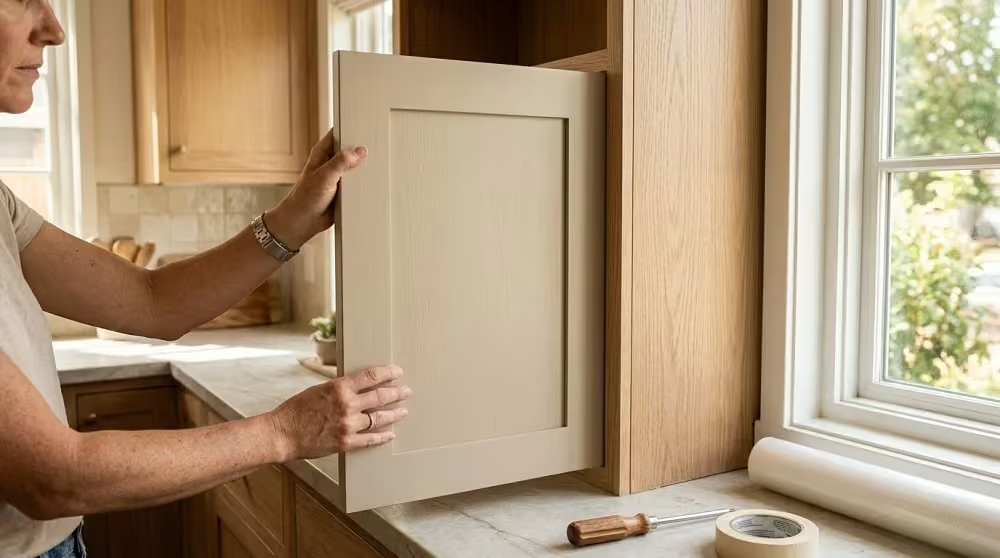
Let's get practical about materials, because this choice can mean the difference between cabinets that last decades and ones that need replacing in just a few years. In today’s market, you can find some impressive options, from traditional solid wood to innovative composites.
Let's break them down:
You might feel overwhelmed, but don’t worry, Kitchen Cabinet Guys can help you make your choice. The key to success lies in matching your material choice with your lifestyle, budget, and maintenance preferences. Consider how your kitchen will be used and choose materials that can stand up to your daily demands while also factoring in the aesthetic you want to achieve. There is no right or wrong answer as every family has unique needs.
Book a free in-home consultation with Kitchen Cabinet Guys. We'll bring physical door samples in every style covered above, measure your existing cabinets, and give you a same-day quote for the exact profile, color, and hardware you choose. Most Chicagoland refacing projects run $4,500–$10,000 and are installed in 3–5 working days.

Call us now: (800) 809-7197 or
The architectural style of your home is the single most reliable starting point for selecting the type of door, as it narrows the field before budget or preference even enters the conversation.
When in doubt, Shaker resolves architectural ambiguity in more situations than any other profile, which is why it continues to be the most-requested style for Chicago-area refacing projects.
Profile complexity and kitchen footprint interact directly, and what reads as refined in a large kitchen can make a small one feel claustrophobic.
In open-concept kitchens that flow into living or dining spaces, door styles need to work with the flooring and furniture in the connected sightlines, not just the cabinets.
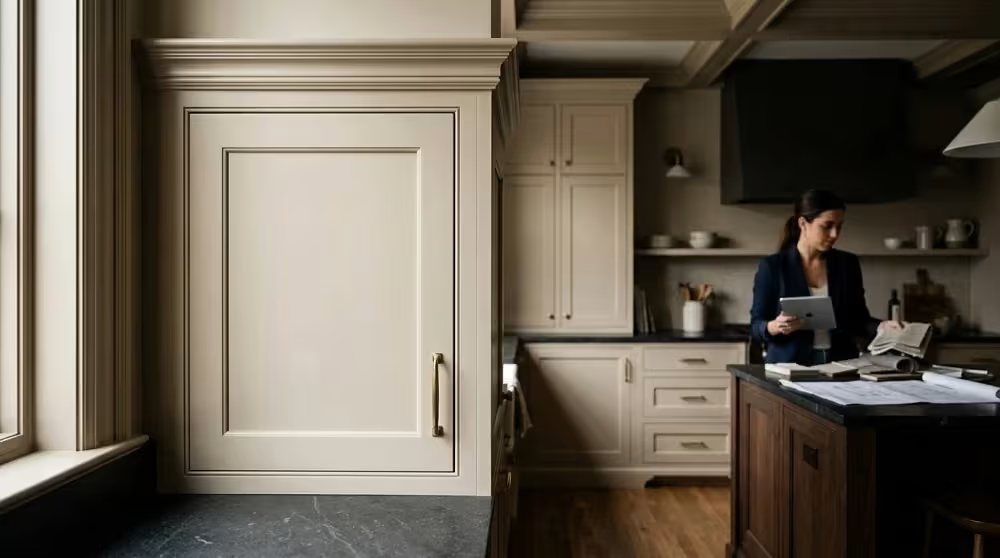
Door style affects how long a kitchen stays clean as much as how it looks on installation day. How complex the profile is determines where grease accumulates, how many passes a wipe takes, and whether certain areas get skipped entirely during a quick cleanup. Matching the door to actual daily use patterns prevents maintenance problems that may appear within the first year.
The right maintenance match is the door a household will actually keep clean over the years of daily use, not the one that looks most impressive when you’re making your choice.
The material you choose will impact long-term durability more than door style alone. Here’s how the four main options break down for a typical Chicagoland refacing project.
At Kitchen Cabinet Guys, our consultants will review material options during the free in-home consultation and recommend the specific substrate and finish ideal for your kitchen's use patterns and budget.
In our experience, we have seen countless homeowners make the same mistakes along this process. Understanding these pitfalls now can save you from expensive regrets later.
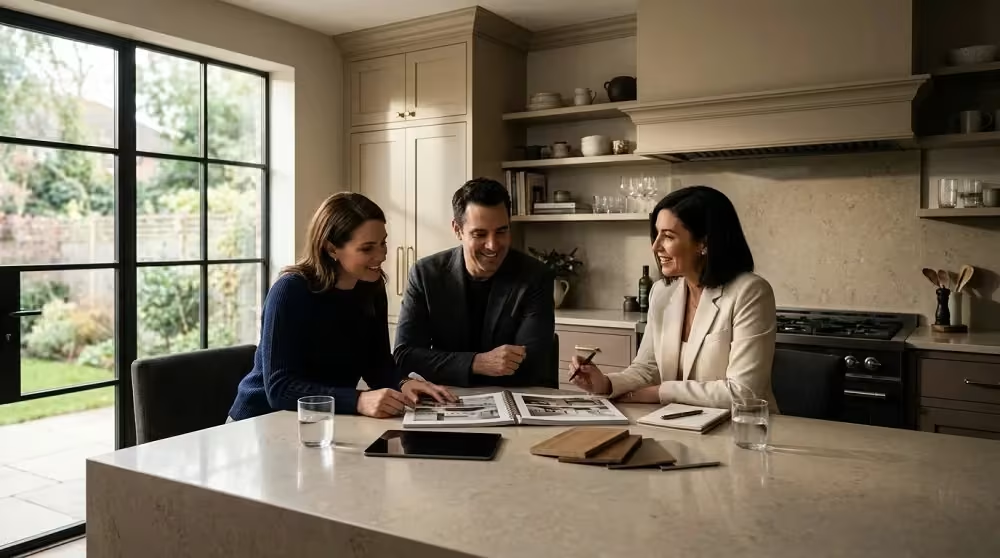
Remember, your cabinet doors aren't just about today; they're an investment in your kitchen's future. We encourage you to take time to avoid these common pitfalls as they’ll help ensure you make choices you'll appreciate for years to come.
Cabinet refacing through Kitchen Cabinet Guys gives Chicago homeowners every door style covered above without the cost or disruption of full replacement. We manufacture every door at our West Chicago facility using American-made MDF and 3D laminate, install them in 3–5 working days, and back the work with a five-year warranty. Pricing for a typical kitchen runs $4,500–$10,000, with financing available at 0% interest for 18 months.
Schedule a free in-home consultation. Our team will measure your cabinets, walk you through door style options in person with physical samples, and give you a same-day price estimate, the actual price you'll pay, not a range.
Yes. When you reface with Kitchen Cabinet Guys, every door is brand new; we manufacture replacement doors at our West Chicago facility in any style we offer. We refinish the existing cabinet boxes with matching 3D laminate, but the doors themselves are not the original doors.
Shaker is the most-requested door style for Chicago-area refacing projects. It's popular because it works on bungalows, colonials, ranches, and contemporary homes, holds resale value, and falls within our standard refacing price range of $4,500–$10,000 without upcharges.
Shaker doors are included in our standard refacing pricing of $4,500–$10,000 for a typical 30-linear-foot Chicago kitchen. There's no per-door upcharge for Shaker because it's our most-produced profile.
Yes. Slab and flat-panel doors need less CNC machining than raised panel profiles, so they're often the lowest-cost option for refacing projects. Raised panel can add $500–$1,500 to a typical Chicago kitchen, depending on size and panel complexity.
Generally no. True inset doors require the cabinet frame itself to be built for inset construction, and most existing Chicago-area cabinets are overlay-style. We're upfront about this during consultations, so you don't pay for an outcome we can't deliver.
Typical Chicagoland refacing projects are completed in 3–5 working days, regardless of the door style you choose. The doors are manufactured in advance at our West Chicago facility, so the installation day is fast.

We bring physical samples in every door style to your kitchen, measure your cabinets, and hand you a same-day price. Most Chicagoland kitchens run $4,500 to $10,000 and install in 3 to 5 working days.
Call us now: (800) 809-7197 or
Cabinet refacing cost in Chicago runs $4,500–$10,000, or $100–$450 per linear foot. See what drives the price and get a same-day price estimate today.
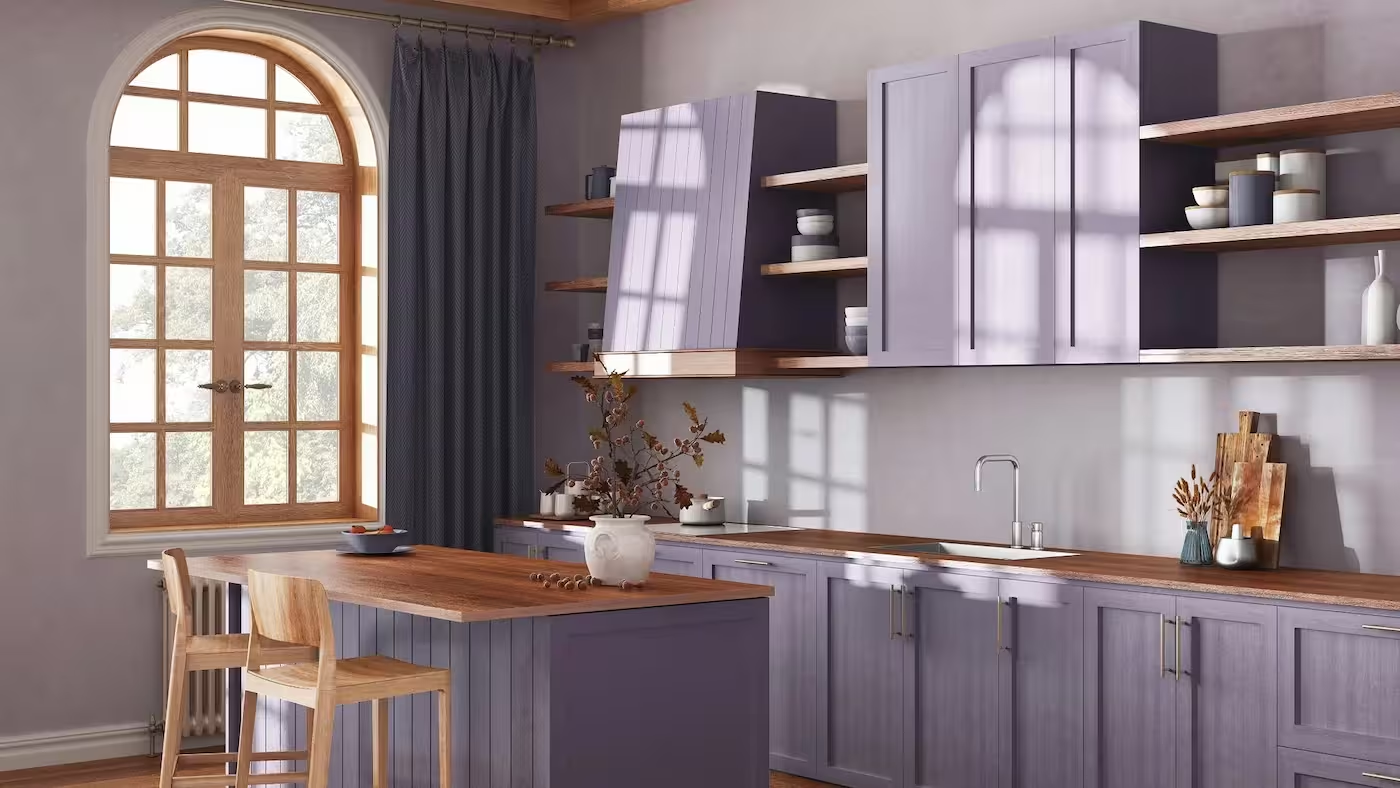
Need inspiration for your kitchen cabinets renovation? Explore the 2026 cabinet refacing color trends and find your perfect match.
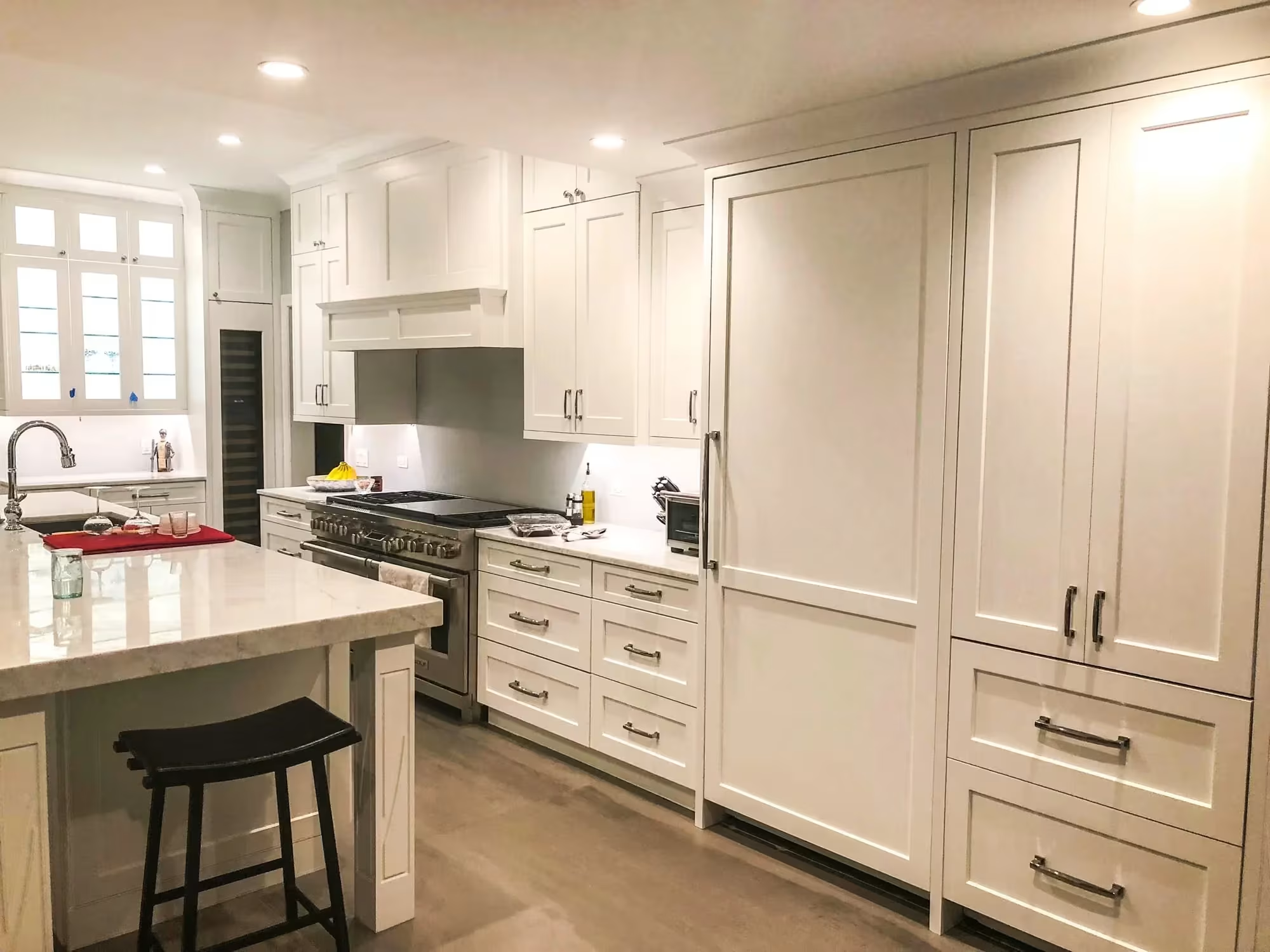
Thinking about kitchen cabinets? Compare inset vs. overlay styles to find the perfect match for your design and storage needs.