
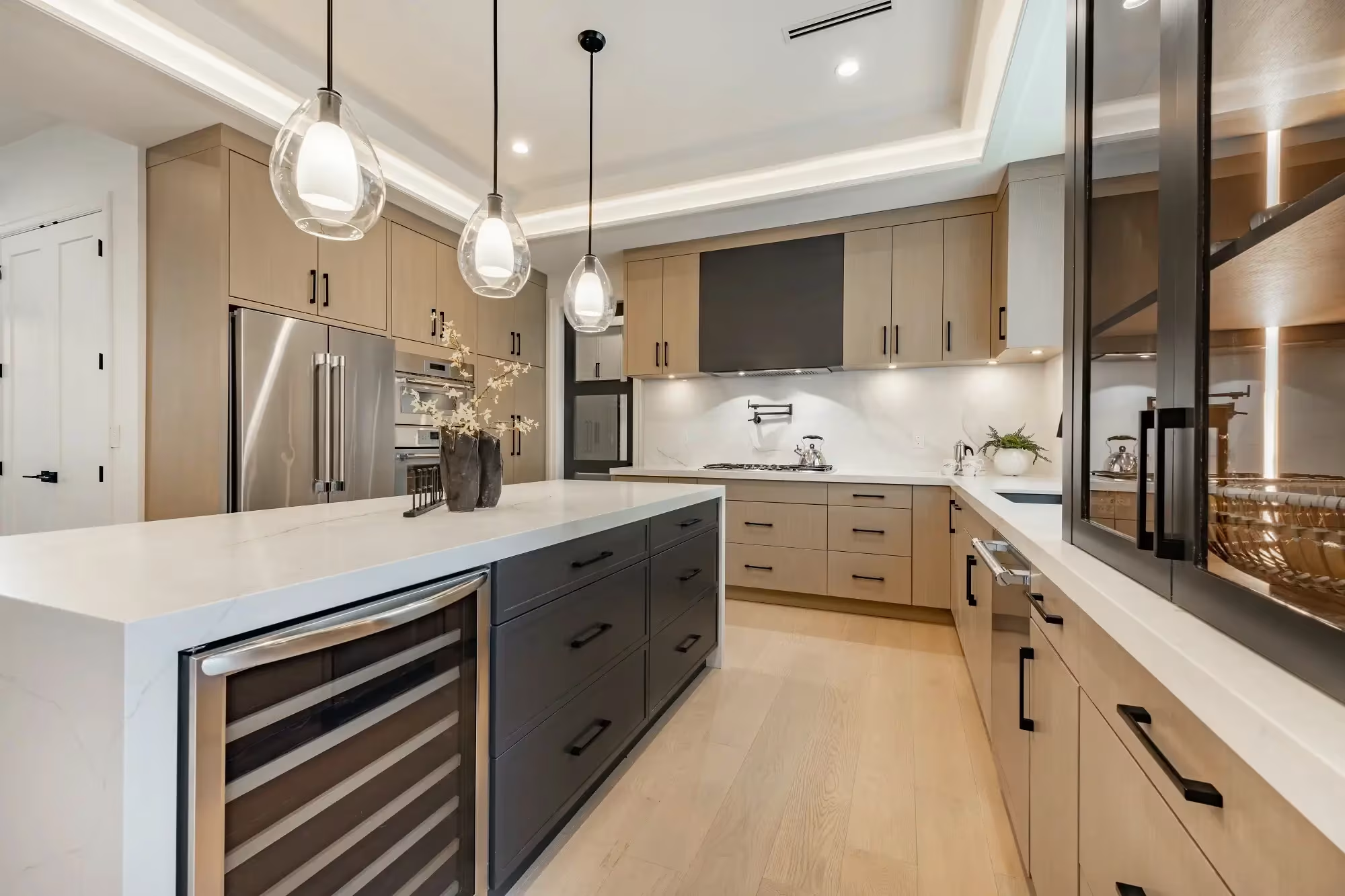
20 Expert Strategies for Creating a Cohesive Kitchen Design
Discover how to create a cohesive interior design with professional strategies for color, texture, hardware & cabinet refacing. Get your dream kitchen!
Published
11/20/2023


Cabinet refacing costs between $4,000 and $9,000 for a standard kitchen. But how long before that investment pays off? Our cabinet refacing team at Kitchen Cabinet Guys works through this question with Chicagoland homeowners daily.
The answer comes down to three things: daily use value over the finish lifespan, costs avoided by not painting or replacing, and resale impact. In this article, we delve into these factors with specific figures, direct comparisons, and scenario-based analysis.
The cost to reface kitchen cabinets breaks down by material type, kitchen size, and scope of work.
For a standard kitchen with approximately 20 linear feet of cabinetry and 10–14 cabinet doors and drawer fronts, refacing typically costs between $4,000 and $9,000. The lower end reflects thermofoil application on a smaller kitchen with minimal hardware changes. The upper end reflects 3D laminate, custom door profiles, soft-close hardware, and specialty features like glass inserts.
On a per-linear-foot basis, professional refacing runs $200–$450, compared to $75–$200 for cabinet painting and $600–$1,750 for full cabinet replacement. These ranges come directly from project pricing across Chicagoland kitchens handled by our team at Kitchen Cabinet Guys.
Annual cost estimates divide the total cost range by the expected lifespan of the finish. Ranges reflect a standard 10×12 kitchen. Actual costs vary by cabinet count, material selection, and regional labor rates.
The cost per year figure is the most practical lens for payback analysis. For example, a $7,000 3D laminate refacing project that lasts 17 years costs roughly $412 per year, which is substantially less than repainting every 6–7 years at $2,500–$3,500 per cycle.
When you understand which factors move the needle, it’s easier to get an accurate estimate and plan for the final cost. Two kitchens of identical square footage can have very different refacing costs depending on door count, material grade, and finish complexity.
The most controllable variable is material choice. Selecting thermofoil over 3D laminate may be less expensive up front, but it also reduces expected finish life. Over a 15-year horizon, a homeowner who chooses thermofoil may incur a second refacing or painting project, eroding the initial savings.
Cabinet refacing pays off through everyday use, avoided replacement costs, and added value at resale.
The biggest immediate benefit of cabinet refacing is improving the function and appearance of a space you use multiple times a day. A kitchen with peeling thermofoil, chipped door edges, or visually dated cabinet fronts degrades the experience of cooking, cleaning, and spending time in the space. Refacing removes that friction.
Quantifying daily use value is subjective, but the cost-per-day calculation is concrete. A $7,000 refacing project that lasts 18 years costs approximately $1.07 per day over its lifespan. A $5,000 project lasting 15 years averages $0.91 per day. Both figures are materially lower than the alternative of repeating a $2,500–$4,000 paint job every 6–8 years.
A significant portion of refacing's financial return comes from costs that never happen. When you compare the 20-year costs of three typical kitchen upgrade options, the gap becomes easy to see.
Painting cycle assumes repainting every 6–7 years at $2,500–$4,000 per cycle. Refacing assumes 3D laminate with a 15–20 year lifespan. All figures approximate for a standard 10×12 kitchen.
Over 20 years, 3D laminate refacing and repeated painting arrive at similar total costs, but refacing delivers that result without three rounds of kitchen disruption, touch-up work, or declining finish quality in high-traffic areas. The avoided disruption has real value, particularly for households with children or active cooking schedules.
Against full cabinet replacement, refacing consistently saves $6,000–$26,000 on the same project scope. Those savings are realized immediately, with no payback period required; it's money that stays in the homeowner's account from day one.
Cabinet condition is one of the first things buyers register during a walkthrough. Cabinets cover more visual surface area than countertops, flooring, or appliances combined, and their condition shapes the immediate impression of whether a home has been maintained or neglected. Dated door styles, worn finishes, and chipped edges read as deferred maintenance, a price that buyers factor in.
In our experience across Chicagoland projects, sellers who reface before listing consistently see fewer buyer objections and cleaner offers versus homes where cabinetry is left unchanged. The kitchen no longer becomes a negotiating point, and buyers move through it without mentally calculating what it would cost them to fix.
Refacing achieves this at a fraction of the cost of full cabinet replacement. The visual result — new doors, updated drawer fronts, fresh laminate on the cabinet box surfaces — is what buyers see.
The fact that the cabinet boxes themselves remain in place is invisible to them and irrelevant to the impression it creates. For homeowners selling within 1–5 years of the project, that buyer-facing impact is where refacing cost recovery is most direct and most immediate.
Get an itemized estimate for your kitchen and compare it directly against replacement cost. Kitchen Cabinet Guys delivers same-day pricing.

Call us now: (800) 809-7197 or
How fast you recover your cost depends on your situation. These three scenarios cover the most common cases.
Homeowners who stay 10+ years after refacing get the full financial benefit. The cost per year drops steadily, the kitchen remains functional and visually current, and no additional surface treatments are needed for 15–20 years with 3D laminate.
For homeowners planning to sell within 1–3 years, refacing can accelerate a sale and support a higher list price. Buyers often associate an outdated kitchen with deferred maintenance, and updated cabinets can help change that impression. In our experience, sellers who reface before listing move through the offer stage with fewer objections and less buyer pushback on price.
In rental properties, cabinet refacing creates a durable finish that helps minimize the need for frequent touch-ups and repairs. Laminate surfaces resist chipping, moisture, and cleaning chemicals better than painted cabinets, lowering maintenance frequency over a typical 5–8 year cycle between major updates.
The payback period for cabinet refacing isn’t a single number; it's a function of your specific project cost, the alternative you're comparing against, how long you'll stay in the home, and your local resale market.
Cost estimates vary significantly by kitchen size, door count, and material. Rather than using an online range, request an in-home estimate with itemized pricing.
What's the alternative? If painting is the alternative, calculate what 2–3 paint cycles over 15 years would cost. If replacement is a possibility, calculate that total and subtract your refacing quote to find instant savings.
Divide your refacing quote by the expected lifespan of the material (15 years for 3D laminate is a reasonable mid-case). That's your annual cost basis for comparison.
If you plan to sell within 5 years, research comparable sales in your neighborhood and note whether updated kitchens are achieving meaningfully higher prices than kitchens with dated cabinetry.
If boxes are solid and plumb, full refacing value is accessible. If there's any structural concern, get that assessed before committing to the refacing cost.

Refacing applies new surfaces to existing cabinet frames. If the boxes themselves have water damage, warping, delamination, or compromised joints, the new finish material sits on a failing structure. The result won't last 15–20 years, and the full project cost is essentially lost. Cabinet boxes should be solid, plumb, and stable to qualify.
Refacing keeps the existing cabinet configuration in place. If the kitchen genuinely needs a new layout, more storage, a different workflow, or additional cabinet runs, refacing won’t address those functional deficits. Spending $6,000–$9,000 on a kitchen that still doesn't work for the household often leads to limited satisfaction and little impact on resale value.
In markets where kitchens sell at or near the median regardless of condition, a $6,000–$7,000 refacing investment may not be fully recoverable within 12–18 months. In these cases, a lower-cost paint update can often create a similar impression for buyers and is easier to recoup quickly.
If cabinets were refaced 8–10 years ago with thermofoil that is now peeling, there may also be moisture damage to the MDF underneath the lifted film. A second refacing on a compromised substrate requires more extensive prep work and may necessitate partial or full box replacement, which changes the project scope and economics significantly.
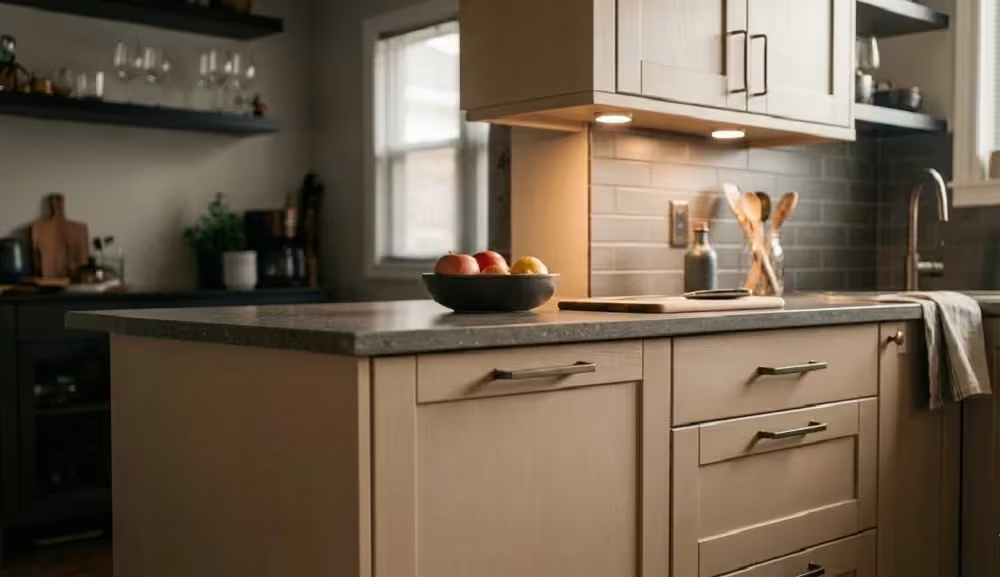
The cost of cabinet refacing is often influenced more by material choices than by the size of the kitchen.
Thermofoil is less expensive upfront — typically $4,000–$6,500 for a standard kitchen — but carries a shorter expected finish life of 10–15 years. In high-heat or high-humidity kitchens, the range compresses. Near dishwashers, ranges, and steam sources, thermofoil can start delaminating at 7–10 years, particularly on lower-quality applications. For homeowners selling within 3–4 years, thermofoil delivers a visually comparable result at a lower cost, with the finish still appearing new at the time of sale.
3D laminate refacing costs more — $5,500–$9,000 for a comparable kitchen — but handles kitchen conditions significantly better. The vacuum-press bonding process creates a strong bond that holds up against heat, moisture, and everyday cleaning products. The protective clear layer prevents surface scratches and fading.
Kitchen Cabinet Guys uses 3D laminate with over 200 design options applied via vacuum-press technology for consistent bond quality across the entire door and drawer front surface. For homeowners staying 12+ years, the additional cost over thermofoil pays for itself by eliminating a second refacing or painting project.
Cabinet door replacement, where old doors and drawer fronts are removed and replaced with new, custom-manufactured doors while keeping the existing cabinet boxes, sits in the $3,500–$7,000 range for a standard kitchen and delivers the most dramatic visual change. If cabinet boxes are in good shape but the doors are severely dated or warped, replacing the doors can deliver a similar look to full refacing at a slightly lower labor cost.
Cabinet refacing recovers its cost through three streams: daily use value over 15–20 years, money saved against painting cycles or full replacement, and cleaner buyer offers at resale. For homeowners who stay 7–15 years, the annual cost is consistently below the repeat-painting alternative. Where cabinet boxes are solid, and the layout still works, refacing delivers cost recovery that grows with time in the home. Contact us, and we’ll talk through your specific situation.

Kitchen Cabinet Guys provides same-day price estimates based on your cabinet count, material choice, and kitchen layout.
Call us now: (800) 809-7197 or
Discover how to create a cohesive interior design with professional strategies for color, texture, hardware & cabinet refacing. Get your dream kitchen!
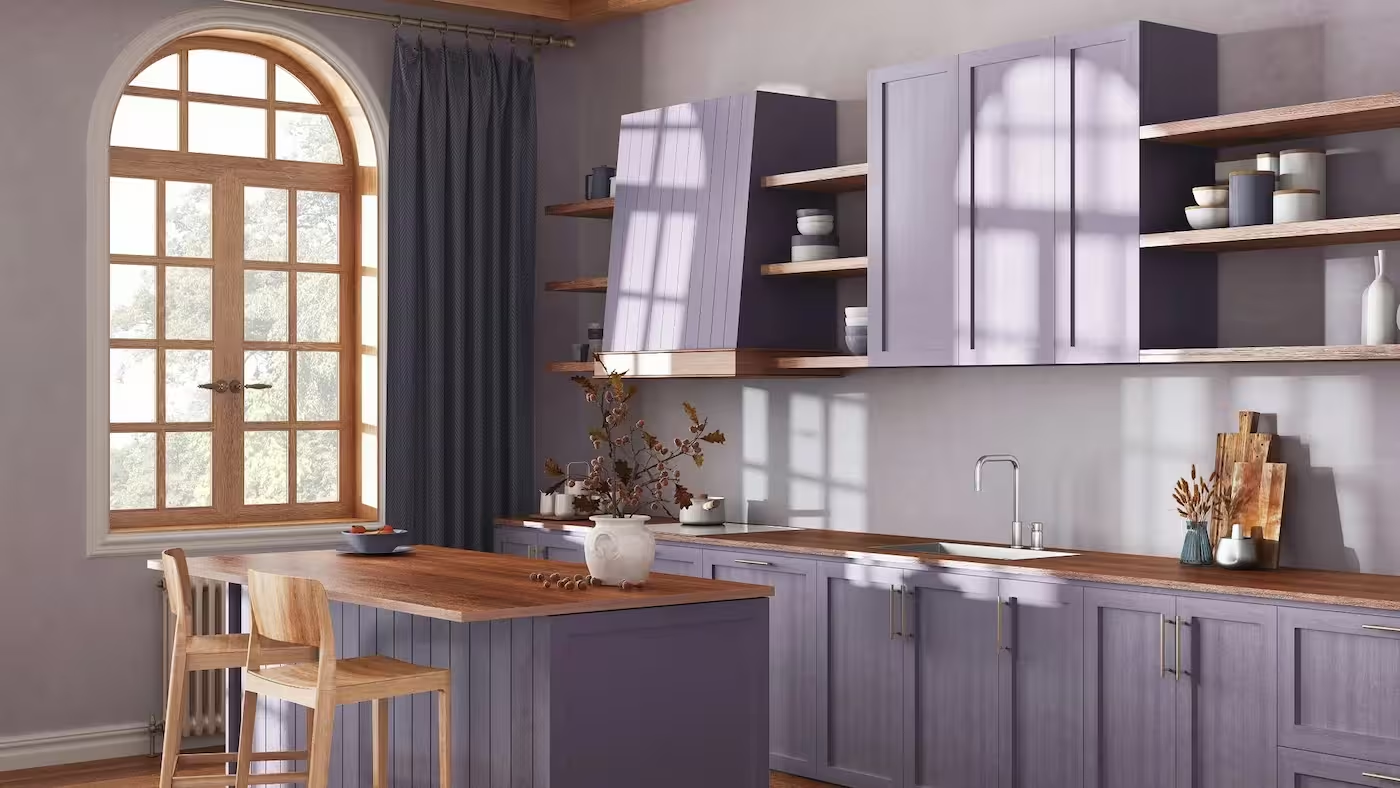
Need inspiration for your kitchen cabinets renovation? Explore the 2026 cabinet refacing color trends and find your perfect match.
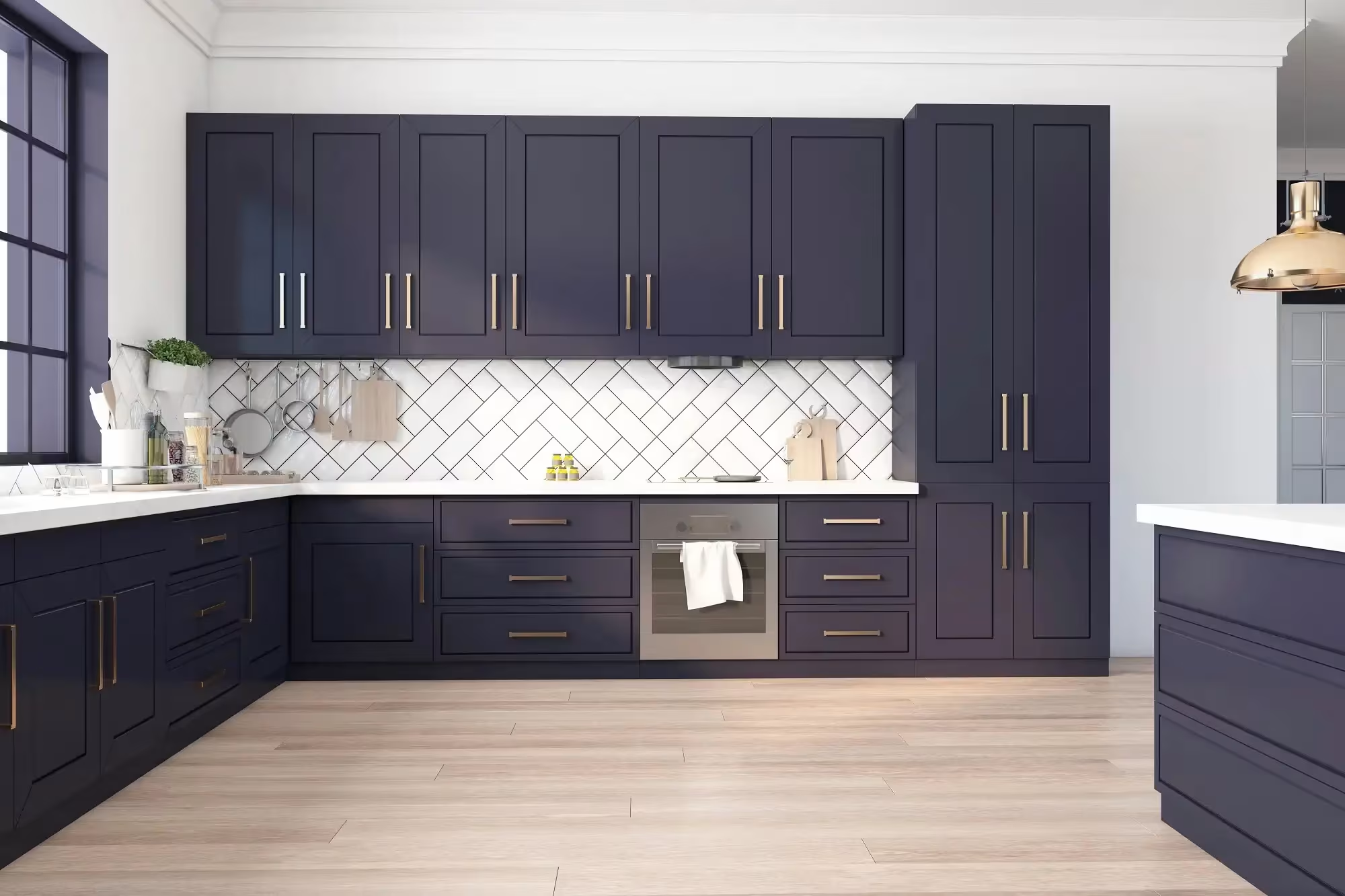
Discover the most effective cheap ways to update kitchen cabinets in Chicagoland. 8 proven methods from DIY painting to professional cabinet refacing.