
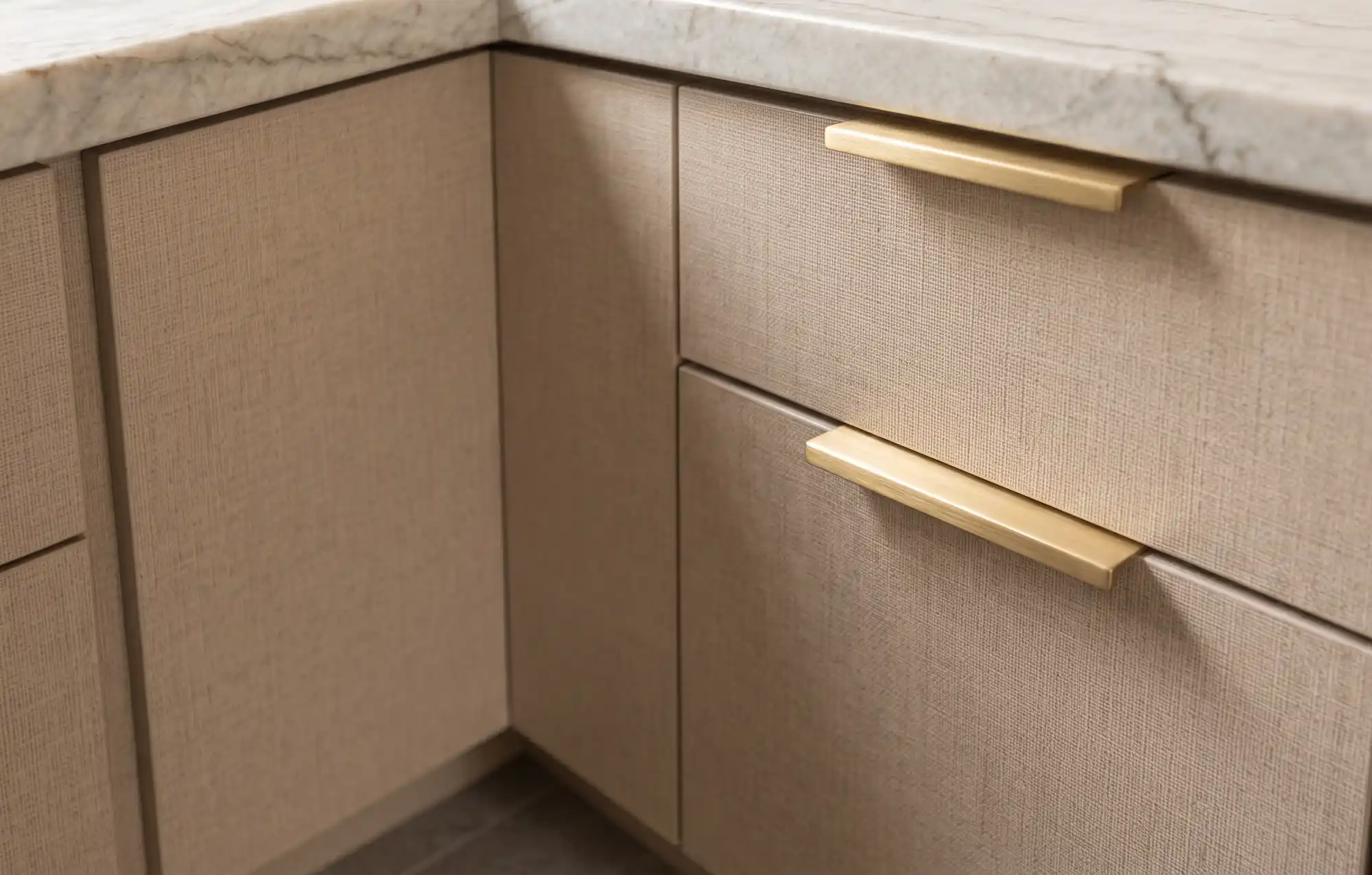
ROI for Cabinet Refacing Before Selling vs. Renting
Compare cabinet refacing ROI for resale vs. rental properties. 2026 cost data, return percentages, and material guidance from Kitchen Cabinet Guys.
Published
7/21/2026
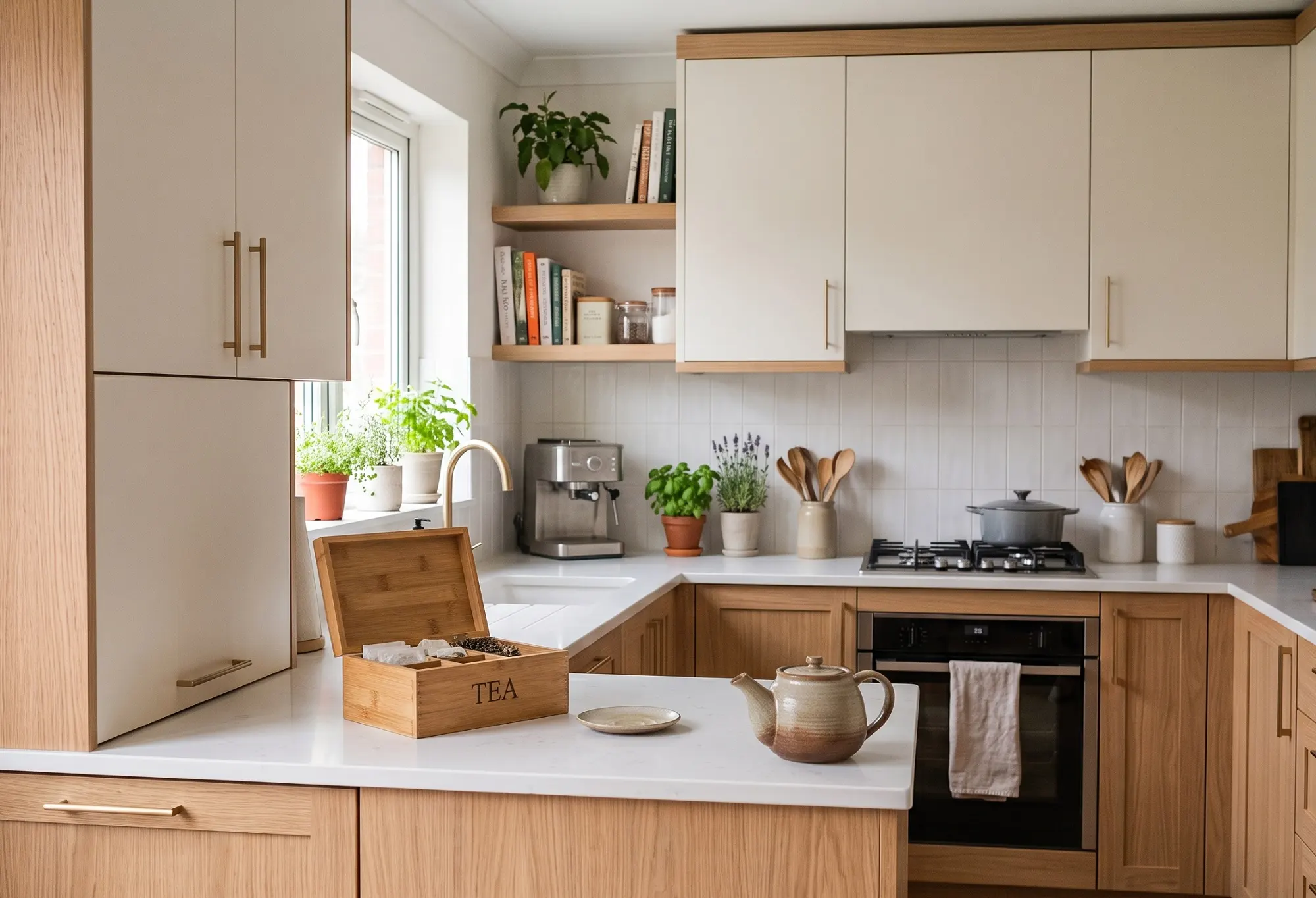


A small kitchen with outdated cabinets feels even smaller. Worn finishes, dark stains, and bulky door profiles absorb light and shrink the visual space, yet full cabinet replacement runs $12,000 to $35,000 and rarely changes the footprint.
Cabinet refacing replaces doors, drawer fronts, cabinet box finishes, and hardware in 3-5 days while the existing layout stays intact. In smaller kitchens, focusing on the right updates can create the biggest visual impact without stretching the budget.
Below are the door styles, finish colors, materials, hardware, and layout strategies that work best for small kitchen refacing projects in 2026.
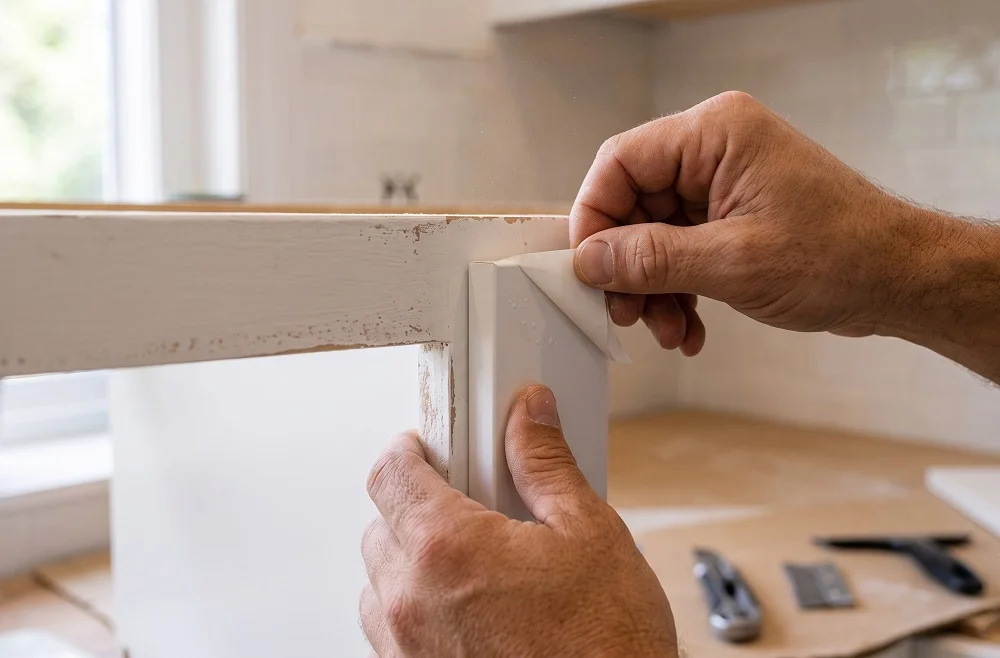
In a small kitchen, the cabinet footprint is typically fixed. Relocating plumbing, modifying electrical systems, or extending cabinetry often adds significant expense without creating much additional usable space. When the footprint is set, the priority shifts to how the cabinetry looks and how the surfaces interact with light and sightlines.
Cabinet refacing addresses that priority directly: the existing cabinet boxes stay in place, and every visible surface receives new material in the chosen style and color. A few targeted layout adjustments, which we cover later in this guide, can still open up the room without altering that footprint.
What a small kitchen refacing project includes:
Key advantages over full replacement in compact spaces:
The door profile has a stronger effect on perceived kitchen size than most homeowners expect. In a small kitchen, the doors are the dominant visual element because the eye is always close to them.
Slab doors have no frame, no raised center, and no recessed groove. The flat, uninterrupted surface reflects light evenly and creates fewer shadow lines. In smaller kitchens, where cabinetry occupies much of the visual field, slab doors minimize visual complexity and enhance the perception of openness. This is the most space-friendly door profile available in 2026.
Shaker-style doors use a simple recessed center panel with clean, straight lines. The profile adds subtle dimension without the heaviness of traditional raised-panel designs. Slab doors open up a room most effectively, but many small-kitchen homeowners still want some definition on the door face, which is why Shaker remains the most requested style for small kitchen refacing projects. Its flat center panel and understated frame keep the design clean and open without feeling as minimal as a slab-style cabinet door.
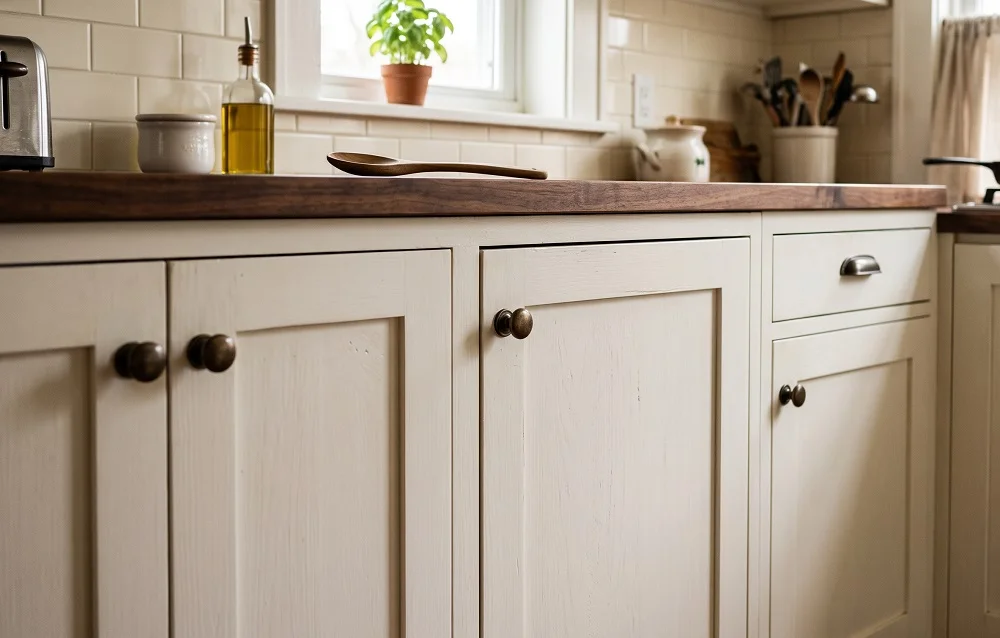
Raised panel doors have a protruding center section surrounded by a decorative frame. These profiles create more shadow lines and visual weight per square foot. In a large kitchen, raised panels add character. In a small kitchen, they tend to make the walls feel heavier and the room feel more enclosed. If the goal is to open up the space visually, raised panels are rarely the right fit.
The door profile has a stronger effect on perceived kitchen size than most homeowners expect. In a small kitchen, the doors are the dominant visual element because the eye is close to them at all times.
Color selection affects how large a small kitchen feels almost as much as layout does. Kitchen Cabinet Guys offers more than 200 colors and textures, including solid matte finishes, high-gloss surfaces, realistic woodgrains, and stone-look patterns, all applied as 3D laminate through the vacuum-press process.
Best finish choices for small kitchens at a glance:
Kitchen Cabinet Guys helps homeowners compare finish samples in their actual kitchen lighting. Book a free in-home consultation to see options side by side.

Call us now: (800) 809-7197 or
Kitchen Cabinet Guys uses 3D laminate, also called rigid thermofoil (RTF), bonded to MDF through a vacuum-press machine at the company's West Chicago facility. Each door or panel is CNC-cut to the selected profile, coated with adhesive, then fused with 3D laminate under heat and pressure.
The result is a continuous, edge-wrapped finish with no visible joints, peeling points, or exposed MDF edges. In a small kitchen, where every surface absorbs more contact, heat, and moisture per square foot, that manufacturing quality results in enhanced durability.
This matters in a small kitchen for three specific reasons:
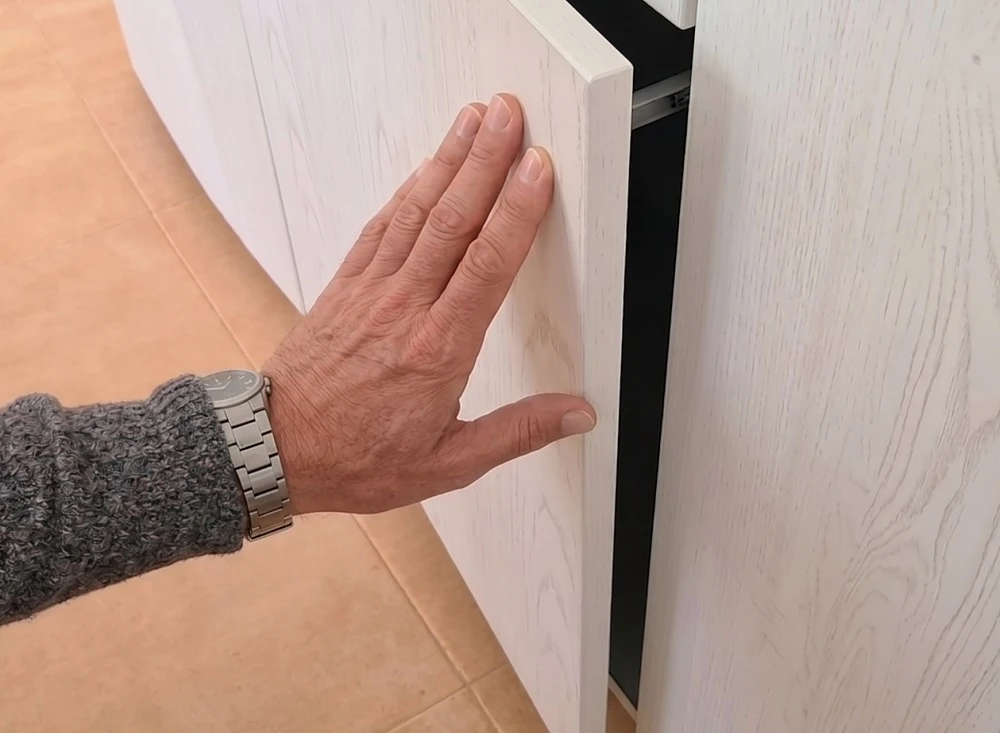
Hardware in a small kitchen serves a dual role: it defines the style and affects how comfortably you move through the space. In a tight galley or L-shaped kitchen, knobs and handles that stick out can make the space feel more cramped by catching clothing, bumping into users, and disrupting the flow of movement.
Hardware styles that work best in compact kitchens:
For a cleaner visual line, matching the hardware finish to the cabinet color, such as matte black handles on dark gray cabinets or brushed nickel on white, reduces contrast and keeps the hardware from drawing attention away from the overall design. All doors and drawers carry soft-close hinges as standard, regardless of which pull style is chosen, reducing slamming and wear in a small kitchen where cabinets open and close more often per day.
Refacing changes the surfaces, but combining it with a few targeted layout adjustments can further improve how a small kitchen functions and feels. These adjustments don’t require structural changes and can be completed alongside or immediately after a refacing project:
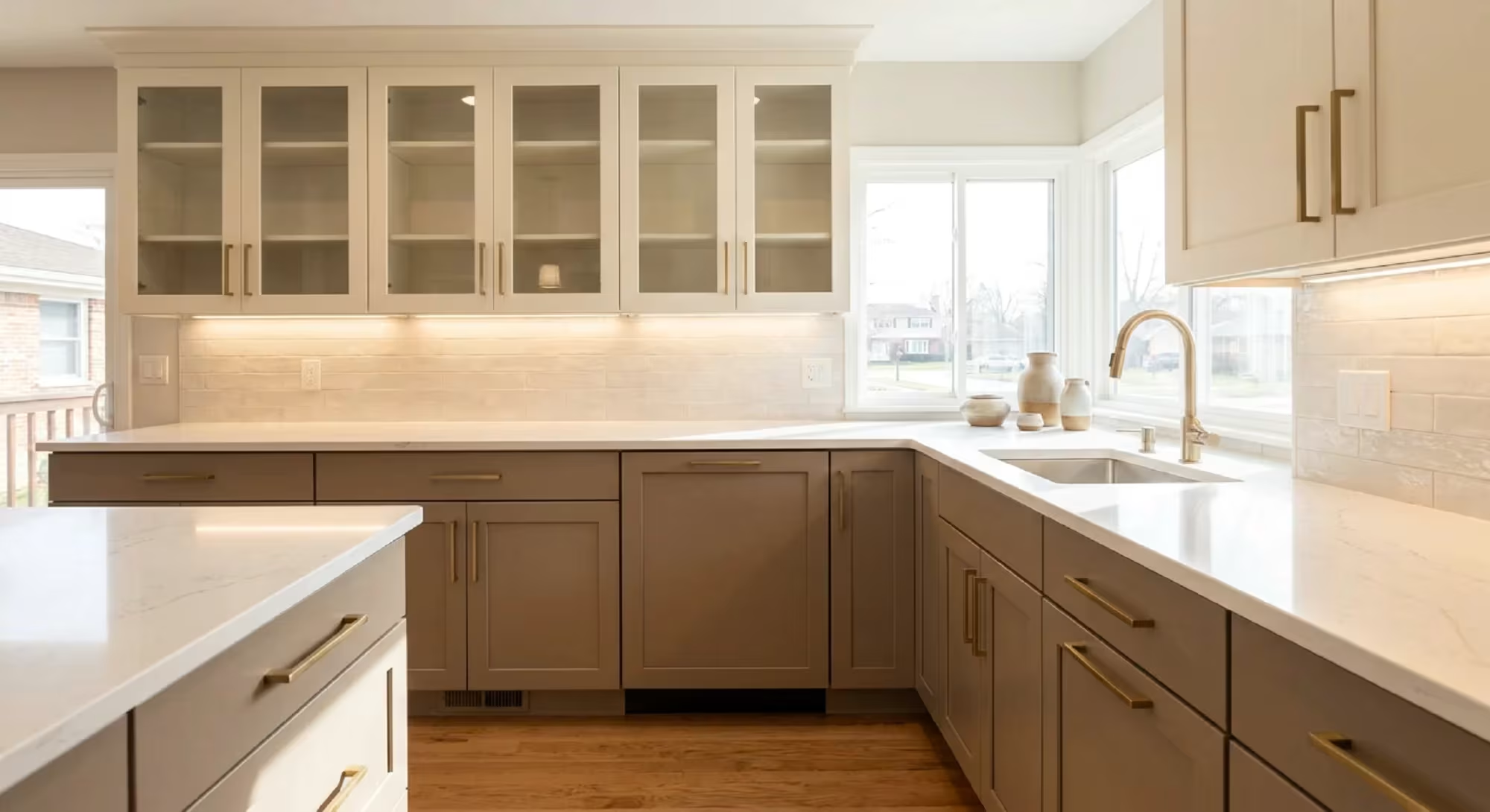
Swapping one or two upper cabinet doors for glass-panel inserts breaks up the solid wall of cabinetry and adds depth. Because you can see through the glass and into the cabinet, the space feels deeper, more open, and less dominated by a solid wall of cabinetry. Frosted or reeded glass works for cabinets that hold everyday items. Clear glass works best for display shelving.
In kitchens where upper cabinets wrap around a full wall, removing one section and replacing it with open shelves creates visual breathing room. This is a larger-scope change than the other adjustments here, still non-structural, but involving more labor and a different look on the wall behind it. It pairs well with a refacing project because the remaining cabinets receive a fresh, unified finish while the open shelf area introduces a lighter visual break.
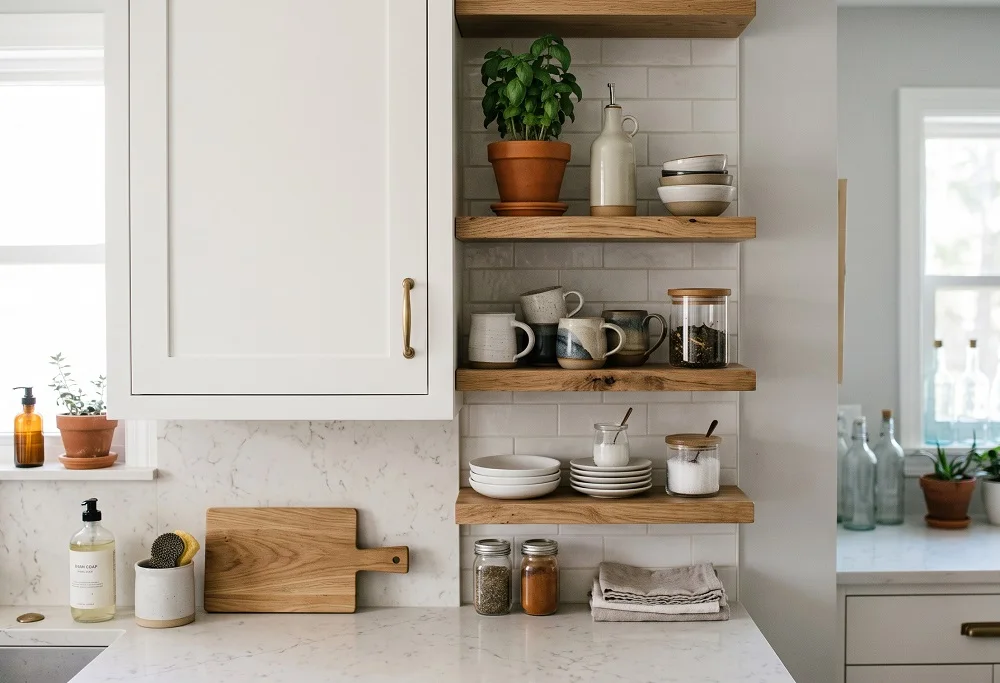
Under-cabinet lighting brightens countertop work areas and washes the backsplash with reflected light, which makes the room feel taller. LED strip lights or puck lights are an easy way to improve kitchen lighting during or after a refacing project, creating a warmer atmosphere without changing the cabinet structure.
Refacing doesn’t change what is inside the cabinets, but the project timeline creates a convenient window to add pull-out shelves, lazy Susans, drawer dividers, or spice rack inserts. For small kitchens where every inch of storage matters, interior accessories can improve daily function alongside the exterior improvements.
Cost depends on the number of cabinet doors and drawer fronts, the total linear footage of cabinetry, the chosen door style and laminate finish, and any add-ons such as new countertops or hardware upgrades.
Cost comparison for a small kitchen (approximately 10 linear feet of cabinetry):
Kitchen Cabinet Guys offers 0% financing on cabinet refacing, along with seasonal promotions including military/veteran discounts, senior citizen discounts, first-time homebuyer specials, and a referral program.
The right door profile, finish color, and hardware can shift the entire character of a compact kitchen while keeping the existing cabinet boxes, plumbing, and appliances in place. Cabinet refacing projects only take days, cost a fraction of full replacement, and last 15-20 years. Kitchen Cabinet Guys offers free consultations, virtual estimates, and financing options for Chicagoland homeowners ready to get started.

Kitchen Cabinet Guys provides free virtual estimates and in-home consultations for Chicagoland homeowners. Send photos of your kitchen or book a visit.
Call us now: (800) 809-7197 or
Compare cabinet refacing ROI for resale vs. rental properties. 2026 cost data, return percentages, and material guidance from Kitchen Cabinet Guys.
Cabinet refacing runs $4,000–$9,000 vs. $12,000–$35,000 for replacement. Compare DIY and pro options to find the cheapest way to refresh your cabinets.
Cabinet refacing costs $4,000–$9,000. See how long it takes to pay off through daily use, avoided replacement costs, and resale impact.