
How Long Does a Kitchen Remodel Take? Complete Timeline Guide (2026).
Find out how long a kitchen remodel really takes in 2026, phase by phase, and see how cabinet refacing gets the same result in days instead of months.
Published
11/6/2026


A kitchen with peeling laminate or dated doors shows up in every appraisal report an Illinois lender orders. It influences the condition rating an appraiser assigns and the offer a buyer is willing to make. Cabinet refacing moves both numbers without the permit or the six-figure price tag of a full remodel.
This research breaks down how Illinois appraisers actually score a refaced kitchen, why the state's property tax system treats refacing differently than a gut renovation, and where the appraisal return is strongest.

The appraisal report breaks a kitchen down into distinct data points, and each one plays a different role in the final value opinion.
A residential appraisal in Illinois follows the same federal reporting format used nationwide, the Uniform Residential Appraisal Report. Under the current appraisal dataset standard, kitchens and bathrooms have dedicated fields for update status, the timeframe of any updates, and overall condition.
The condition rating runs from C1 (new or like-new) down to C6 (needing significant repair). These two fields are scored independently. A kitchen can be old but well maintained, or old and neglected, and the appraiser has to account for that difference in the valuation.
Appraisers also compare a property's effective age against its actual age. A home that has been kept current, including its kitchen, typically carries an effective age lower than its calendar age.
A home with a kitchen that hasn't been touched in 20 years, especially one with visible wear on the cabinet surfaces, tends to carry an effective age closer to or above its actual age. That comparison directly influences the appraiser’s opinion of value, rather than being tied to any single line-item cost.
None of this happens in isolation. Comparable sales, or recent sales of similar homes in the area, must support every conclusion an appraiser reaches. A kitchen upgrade only adds value that the appraiser can defend if comparable homes in the neighborhood with similar updates sold for more.

Before looking at what refacing changes, it helps to separate the two value systems every Illinois homeowner is actually working with.
Illinois homeowners deal with two separate value figures, and they move independently. The appraised value is the lender's opinion of market value, used for a purchase loan, a refinance, or a home equity line.
The assessed value is what the county uses to calculate the property tax bill. In Cook County, assessments follow a triennial cycle, with one-third of the county reassessed each year on a rotating township schedule. The other collar counties, including Lake and DuPage, run their own reassessment cycles on a similar multi-year basis.
Both systems can move outside their normal schedule when triggered:
This is where cabinet refacing behaves differently than a full kitchen remodel, and it matters more in Illinois than in most states given how closely Cook County ties reassessment triggers to permit records.
The permit rules for a kitchen project determine which of those two value systems is affected, and refacing and a full remodel fall on opposite sides of that line.
Across Chicago and the surrounding suburbs, replacing or refacing kitchen cabinets in place, without moving plumbing lines, adding electrical circuits, or altering the wall layout, is treated as a cosmetic update and does not require a building permit.
A full kitchen remodel that relocates a sink, adds a dishwasher line, moves a gas line for a range, or reconfigures the cabinet layout almost always does require one, across the Building Code of Chicago and the equivalent codes in the collar counties.

That distinction has a direct financial consequence. County assessors review permit filings to identify homes that have added value through construction, and a permitted kitchen remodel can trigger an off-cycle assessment, potentially increasing the property tax bill before the next scheduled cycle.
Cabinet refacing, handled without altering plumbing or electrical systems, generally doesn’t generate that paper trail.
The practical result: refacing can raise the number a lender's appraiser assigns to the home's market value while leaving the number Cook County uses to calculate the tax bill largely untouched until the area's regular reassessment year.
A full gut remodel can raise both numbers at once, and the resulting tax increase continues every year the home is owned, rather than applying only when the property is sold or refinanced.
With the permit and tax picture established, the next question is what refacing specifically does to the numbers on the appraisal report itself.
Refacing keeps the existing cabinet boxes in place and replaces the doors, drawer fronts, and exposed surfaces with new material, typically 3D laminate, rigid thermofoil, or wood veneer. In Illinois, a full refacing project runs from roughly $4,000 to $13,500 depending on kitchen size and material, with laminate and thermofoil at the lower end of that range and solid wood doors at the top.
On the appraisal side, this work is exactly the kind of change the update-status and time-frame fields on the report are built to capture. A kitchen previously logged as original from the year the home was built is reclassified as updated, with the renovation date recorded as the most recent update.
If the prior cabinets showed peeling thermofoil, water staining, or delaminating surfaces, the condition rating itself can improve, since that rating reflects physical wear rather than layout or square footage.
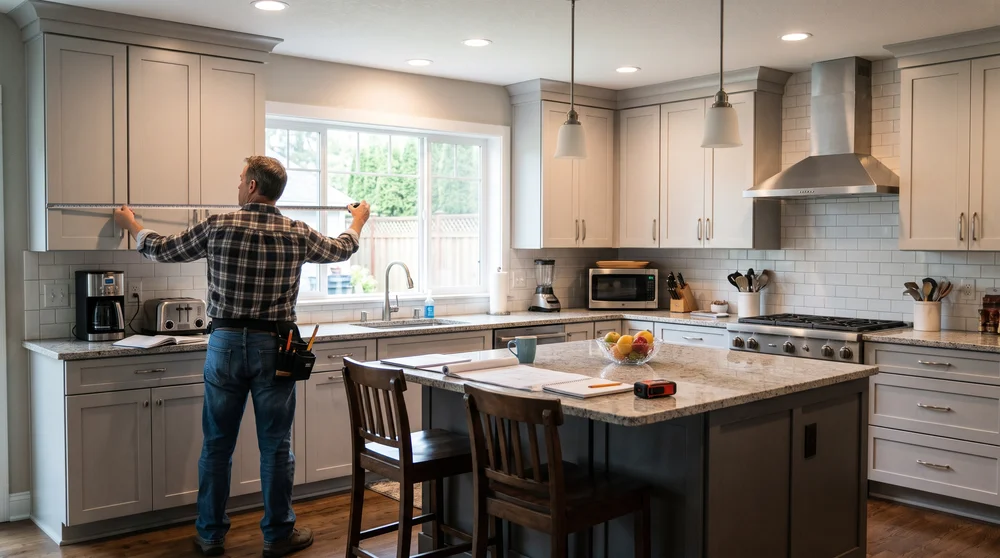
What refacing does not change is the footprint of the kitchen. The appraiser is not crediting the home for a larger kitchen or different floor plan, only for the kitchen’s improved physical condition.
That distinction matters when setting expectations: refacing supports a stronger condition rating and a more current update status, not a change in the home's functional layout score.
Translating that appraisal impact into dollars requires pairing national kitchen recovery data with what is actually happening in the Illinois market right now.
Industry cost-value tracking for kitchen improvements has consistently placed minor kitchen work, the category cabinet refacing falls into, among the highest-recouping projects in the home, with recovery running in the 90-113% range nationally depending on the metro and the market's demand.
Illinois currently sits in a market where that recovery works in the homeowner's favor:
Applied to a typical refacing project, a $7,500 job recouping even the lower end of that range, around 90%, returns roughly $6,750 in supported market value. At the higher end of the range, the same project can return more than its original cost.
The spread depends on the neighborhood's comparable sales, the materials selected, and how far the prior kitchen had fallen behind current buyer expectations.
The two paths both move the appraised value in the right direction. They differ significantly in cost, timeline, and how they affect the property’s tax bill in the years that follow.
The appraisal return on a refacing project depends heavily on the condition it starts from, so the same project can land differently from one kitchen to the next.
The strongest cases share a few conditions:
Refacing has limits, and they show up in a few recurring situations:
Kitchen Cabinet Guys can assess your existing cabinet boxes and give you a same-day, itemized estimate based on your kitchen and your Illinois location.

Call us now: (800) 809-7197 or
Cabinet refacing gives Illinois homeowners a way to improve the update-status and condition fields on an appraisal report without requiring the kind of permit that can trigger an earlier reassessment by Cook County.
The dollar return depends on the neighborhood's comparable sales and the material chosen, but the underlying mechanics are consistent: solid cabinet boxes, a visible improvement in surface condition, and a market with recent updated-kitchen comps produce the strongest result.
For a homeowner weighing a full gut remodel against a lower-cost refacing project ahead of a refinance or a sale, the appraisal considers the same fields either way, while refacing can achieve an updated appearance at a fraction of the cost and potential tax exposure. Contact Kitchen Cabinet Guys to talk through your kitchen's specifics before your next appraisal.

Kitchen Cabinet Guys can assess your existing cabinets and develop a refacing plan based on your kitchen's condition and the Illinois market.
Call us now: (800) 809-7197 or
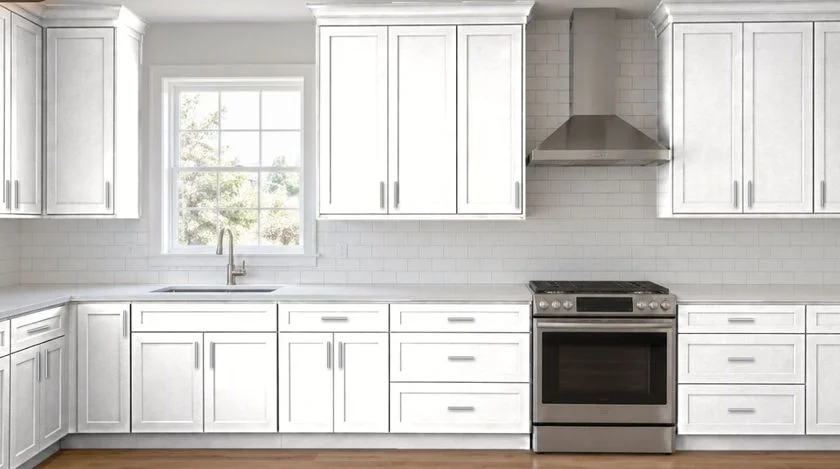
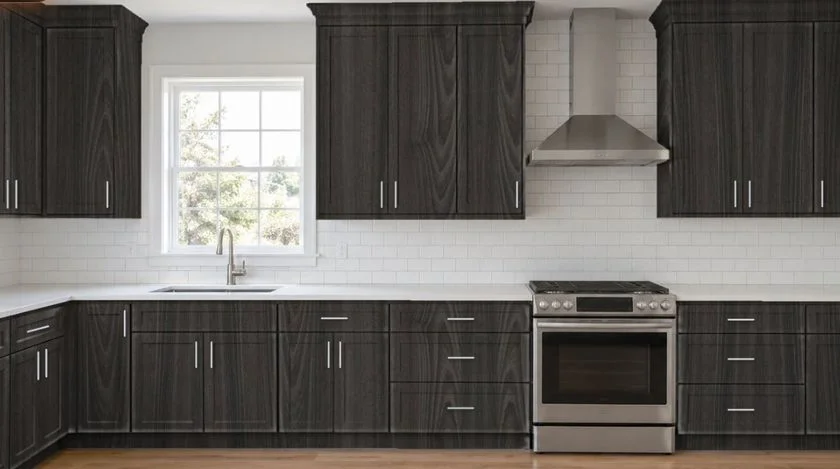
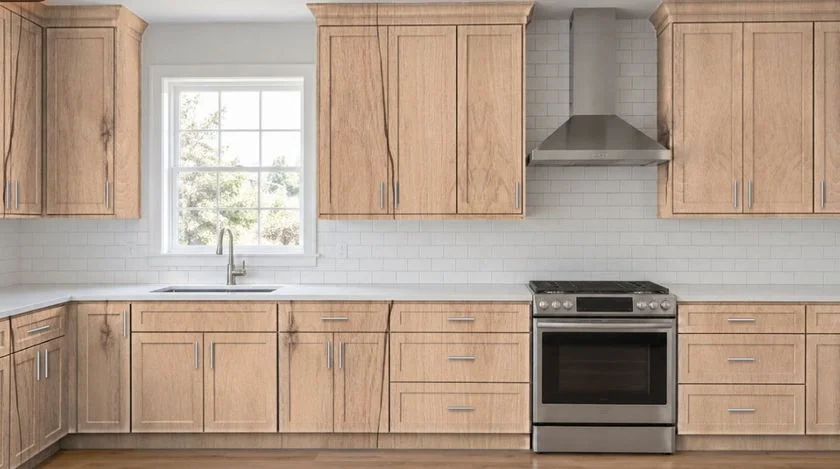 VisualizerChoose Color & Style for Your Kitchen Cabinet
Find out how long a kitchen remodel really takes in 2026, phase by phase, and see how cabinet refacing gets the same result in days instead of months.
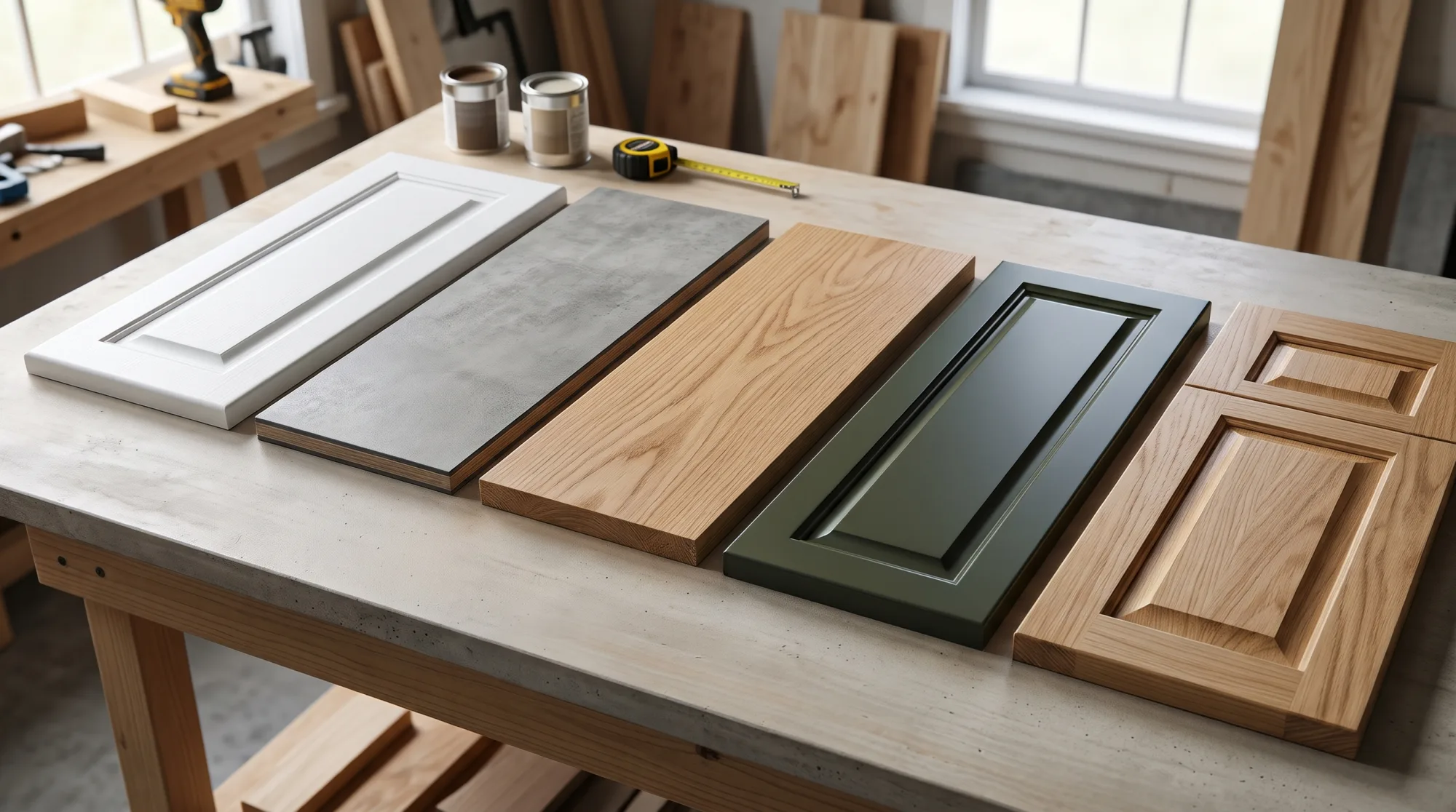
Compare the top kitchen cabinet refacing materials, thermofoil, laminate, veneer, MDF, and solid wood, and see what each offers and where it falls short.
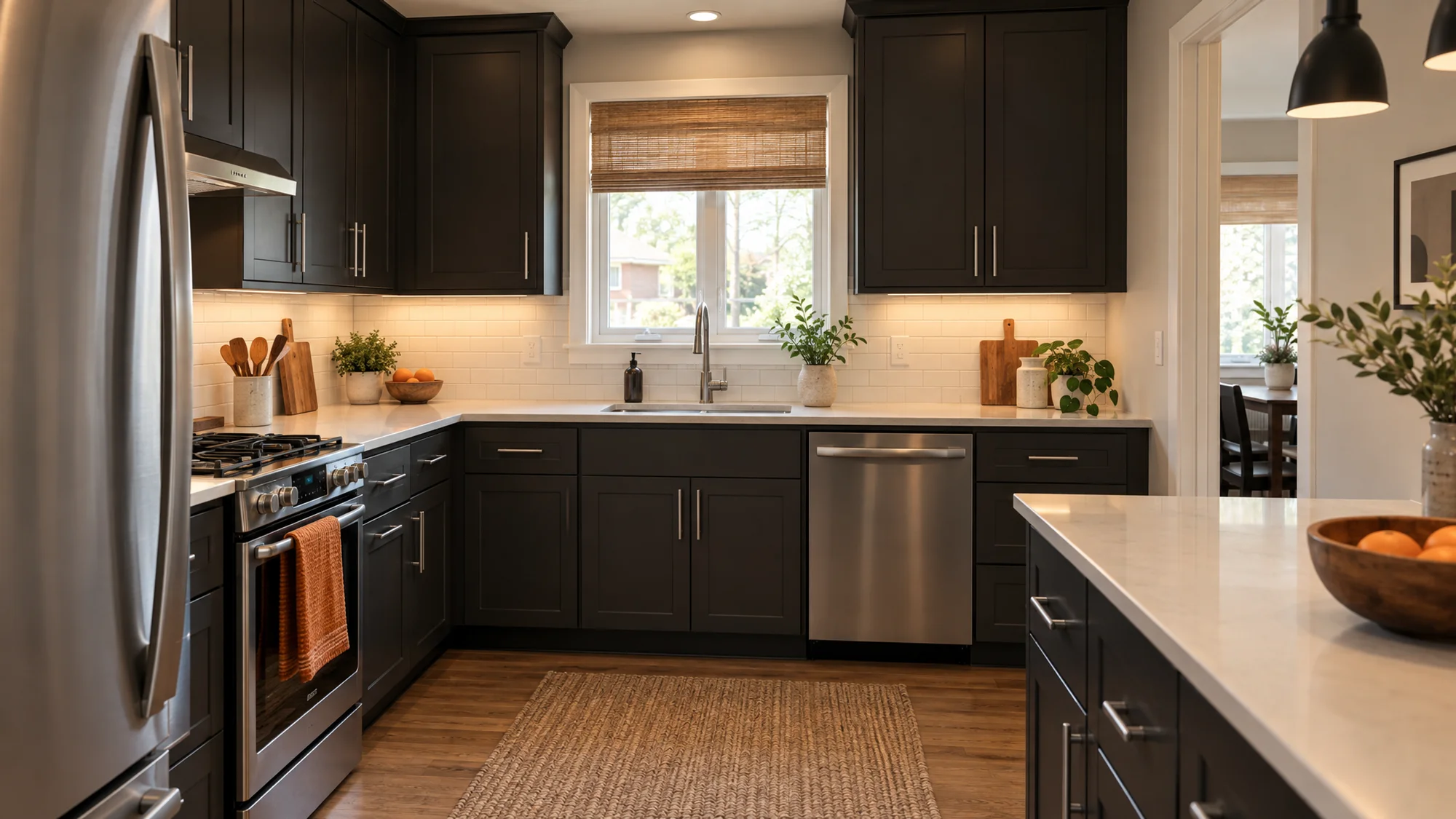
Cabinet refacing for small kitchens in Chicago protects countertops and cuts renovation time. Get a free Kitchen Cabinet Guys assessment today.