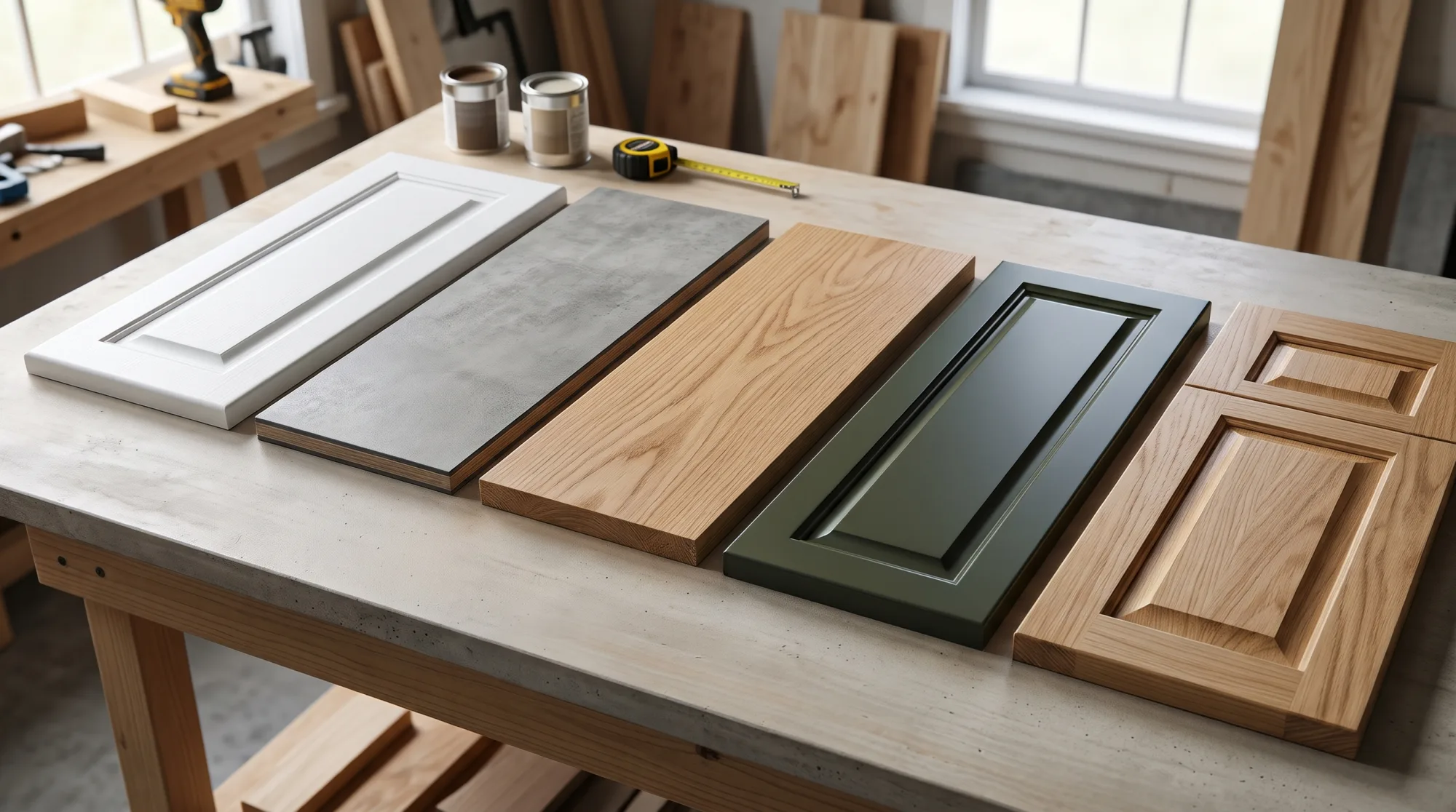
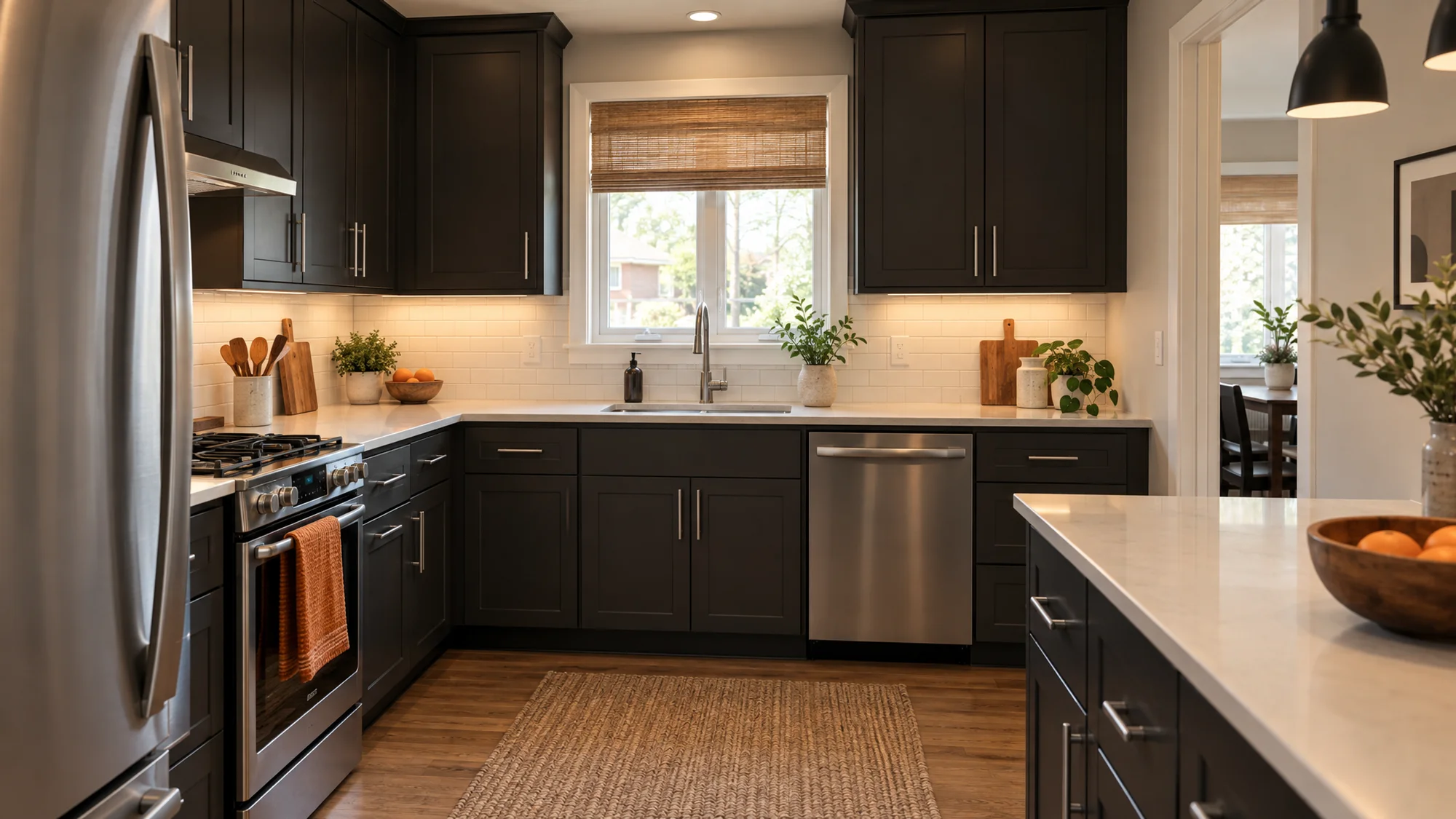
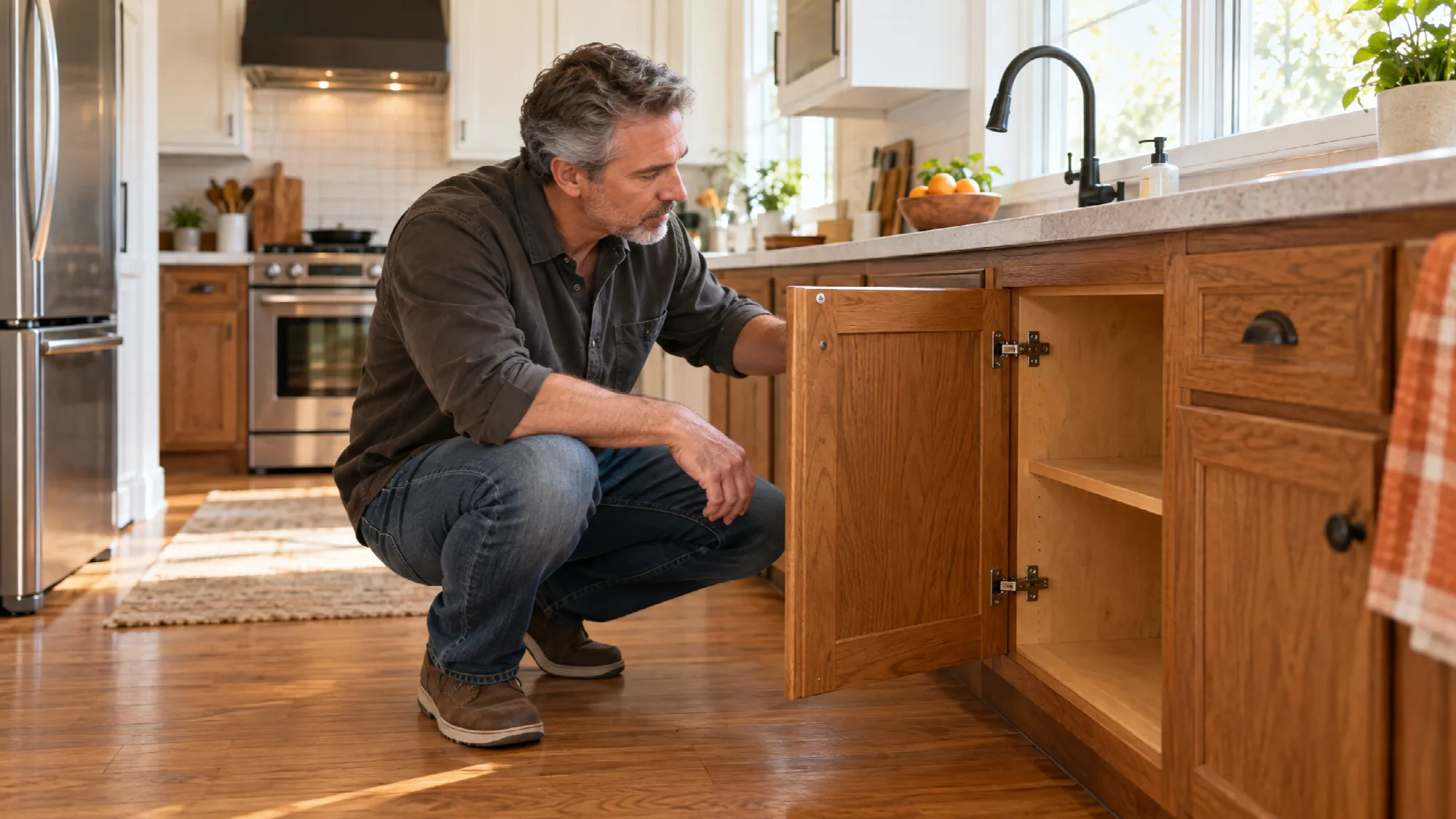
A painted cabinet finish typically needs recoating every 5-8 years. A 3D laminate finish bonded through vacuum-press technology can maintain its color and surface integrity for 15-20 years, reducing the number of material, labor, and disposal cycles a kitchen goes through by more than half.
That gap is the starting point for choosing an eco-friendly finish in 2026. Cabinet refacing keeps your existing cabinet boxes in place and rebuilds only the visible surfaces, so the material savings in this guide apply regardless of which finish you choose.
Your Cabinet Boxes Don't Belong in a Landfill
Construction and demolition activity generated an estimated 600 million tons of debris in the United States in 2018, more than twice the volume of municipal solid waste generated that same year, according to the U.S. Environmental Protection Agency. Cabinet boxes, doors, and countertops pulled out during full kitchen replacements are a routine contributor to that stream.
A refacing project sidesteps that outcome by design. The existing cabinet boxes remain in place, while the doors, drawer fronts, and exposed surfaces are removed and replaced with new materials. What a refacing project keeps out of the landfill:
The cabinet boxes, face frames, and cabinet sides;
Countertops, backsplash, and flooring, since none of it is disturbed;
Plumbing and electrical rough-in, since the kitchen layout doesn't change.
If you're planning a kitchen update in 2026 and want the visual result of new cabinetry without sending the old boxes to a landfill, the finish you select matters as much as the decision to reface in the first place. This guide breaks down today’s finish options, what makes each one a lower-impact choice, and what to ask a refacing company before you sign a contract.
What "Eco-Friendly" Means for a Cabinet Finish
The term gets used loosely in kitchen remodeling, so it helps to separate it into three measurable factors:
Material sourcing: Whether the wood, wood fiber, or composite board in a cabinet component comes from a managed, traceable supply chain.
Chemical emissions: Formaldehyde and volatile organic compounds (VOCs) released from the board, adhesive, or coating, both during manufacturing and for years afterward inside your kitchen.
Service life: How long the finish holds up before it needs replacing, repainting, or repairing.
A finish that fails in eight years forces a second production run, a second installation, and a second load of old material heading to disposal, roughly double the impact of one that lasts 16. Few finishes score well on all three factors at once. The ones worth calling eco-friendly hold up across the full set, not just one.
Want a Warranty-Backed Finish Comparison?
Bring your kitchen photos or schedule a free consultation, and our team will walk you through finish options side by side.
Three composite wood products make up most cabinet door substrates on the market:
Medium-density fiberboard (MDF)
Particleboard
Hardwood plywood
Since 2018, these products sold or manufactured in the United States have been required to meet formaldehyde emission limits under Title VI of the Toxic Substances Control Act (TSCA), enforced by the EPA.
The TSCA Title VI limits mirror the emission standards previously set by the California Air Resources Board (CARB) Phase 2 rule, and compliant products must carry third-party certification confirming the panel meets those limits.
This standard applies to any composite wood board entering the U.S. market, regardless of brand, so it sets a factual baseline rather than a marketing claim. When you're comparing refacing companies, ask whether the MDF used in your project is TSCA Title VI certified. It’s a specific, verifiable question rather than a vague inquiry about sustainability.
Volatile Organic Compounds and Why They Matter Indoors
VOCs are organic chemical compounds that evaporate at normal indoor temperatures, and the EPA has found that concentrations of many VOCs run consistently higher indoors than outdoors, in some cases by a factor of ten. Painted cabinet finishes are a common source of ongoing VOC exposure in kitchens because the paint and solvents used to thin or strip it continue to off-gas for some time after application.
Rigid thermofoil and 3D laminate finishes, by comparison, are heat-fused to the substrate rather than applied wet, which removes the repeated solvent exposure that comes with painting and repainting a kitchen every several years.
Cabinet Finish Options Compared for a 2026 Refacing Project
Finish Type
Substrate
How It's Applied
Repeat Treatment Needed
Typical Finish Life
3D Laminate / Rigid Thermofoil
MDF
Heat and pressure bonded via vacuum press
Rarely, if ever
15-20 years
Painted Cabinet Doors
Solid wood or MDF
Sprayed or brushed liquid coating
Every 5-8 years
5-8 years per cycle
Wood Veneer
Solid wood or engineered core
Adhesive-bonded thin wood layer
Occasional recoating
10-15 years
Solid Wood, Unfinished or Oil-Finished
Solid hardwood
Oil or wax applied by hand
Periodic reapplication
Varies by species and use
The repeat-treatment column is where the environmental comparison gets concrete. A finish that needs repainting every 5-8 years multiplies the material consumption, disposal, and indoor air exposure over a 20-year kitchen lifespan, even if the paint itself carries a low-VOC label at the point of purchase.
How 3D Laminate Refacing Reduces Waste at the Manufacturing Stage
At Kitchen Cabinet Guys, new doors and drawer fronts are produced at our West Chicago production facility rather than shipped in from an outside supplier. The process runs in two parallel tracks:
MDF panels are CNC-cut to the requested door profile at the facility;
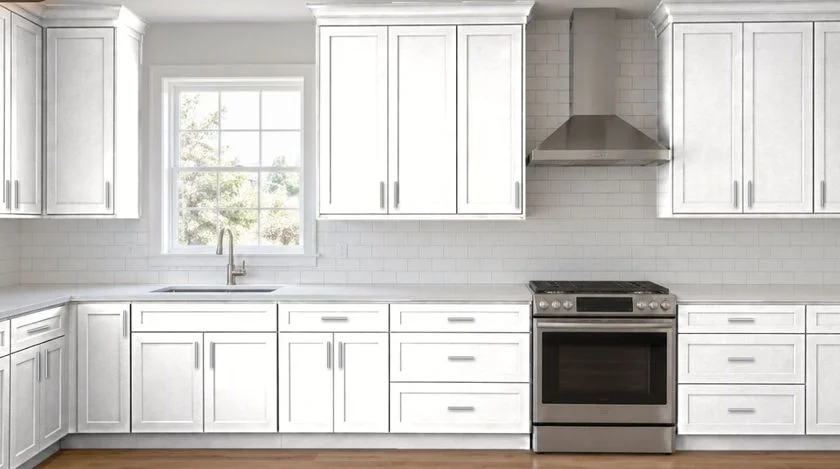
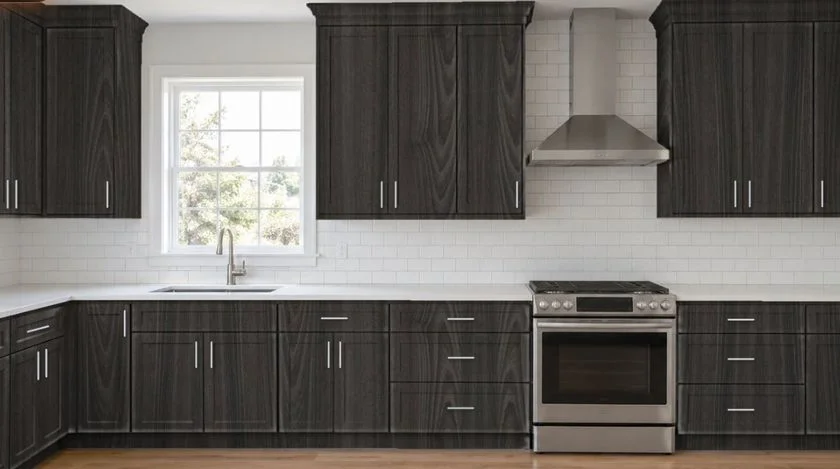
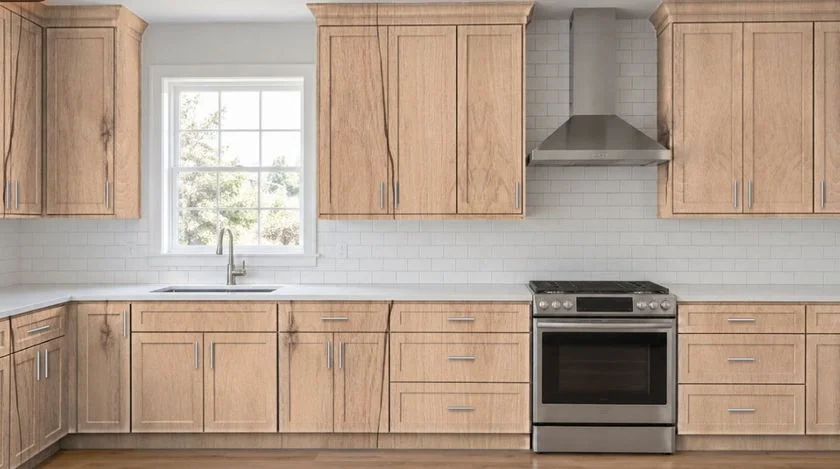
The panels are bonded with 3D laminate through a vacuum-press machine, where heat and pressure fuse the finish to the substrate without seams or exposed edges;
On-site, our team strips the old finish from the existing cabinet boxes and prepares the surface;
The same laminate material is applied directly to the boxes, so color and texture match across every visible surface.
While the doors are produced at the facility, the on-site work leaves the existing cabinet frames in place rather than sending them to a landfill.
Because the process reuses the existing cabinet frame instead of replacing the entire cabinet system, a refacing project requires far less material than a full replacement. Homeowners choosing this route typically save up to 50% compared to full cabinet replacement, while keeping the existing boxes out of the waste stream entirely.
Certified Wood Sourcing for Solid Wood and Veneer Components
For homeowners specifically interested in solid wood doors or wood veneer options, sourcing certification is the marker to look for. Two certification figures worth knowing:
More than 200 million hectares of FSC-certified forest worldwide and over 50,000 FSC-certified companies across its supply chain, according to FSC.
FSC and PEFC certification together cover roughly 10.7% of the planet's total forest area, per the Global Forest Atlas at Yale University.
These figures come from the certifying organizations themselves, which is why a certificate number, not just the word "certified", is the detail to ask for.
An FSC or PEFC chain-of-custody certification on a wood product means the material can be traced back to a forest managed under those organizations' environmental and social criteria. If wood sourcing is a priority for your 2026 project, ask your refacing company or supplier for the certificate number rather than accepting the term "sustainably sourced" without documentation.
Finish Longevity Is Also an Environmental Decision
The finish that lasts longest with the least maintenance also has the smallest long-term environmental footprint because it can avoid another round of material production, disposal, and installation labor. 3D laminate applied through vacuum-press bonding maintains its color and surface integrity for 15-20 years under normal residential use, without the touch-up or full repainting cycles that painted cabinets typically require every 5-8 years.
Kitchen Cabinet Guys backs its refacing work with a 5-year warranty covering workmanship and material defects, reviewed in full during your free in-home consultation.
Start Your Eco-Friendly Refacing Project
Kitchen Cabinet Guys manufactures doors and drawer fronts at our own West Chicago facility and completes most Chicagoland refacing projects in 3-5 business days, all while keeping your existing cabinet boxes out of the landfill. Choose from over 200 3D laminate colors and textures, backed by our 5-year warranty, and get a free estimate to compare finish options for your kitchen.
Compare the top kitchen cabinet refacing materials, thermofoil, laminate, veneer, MDF, and solid wood, and see what each offers and where it falls short.